

Key Takeaways
Fragrance-free vs. unscented
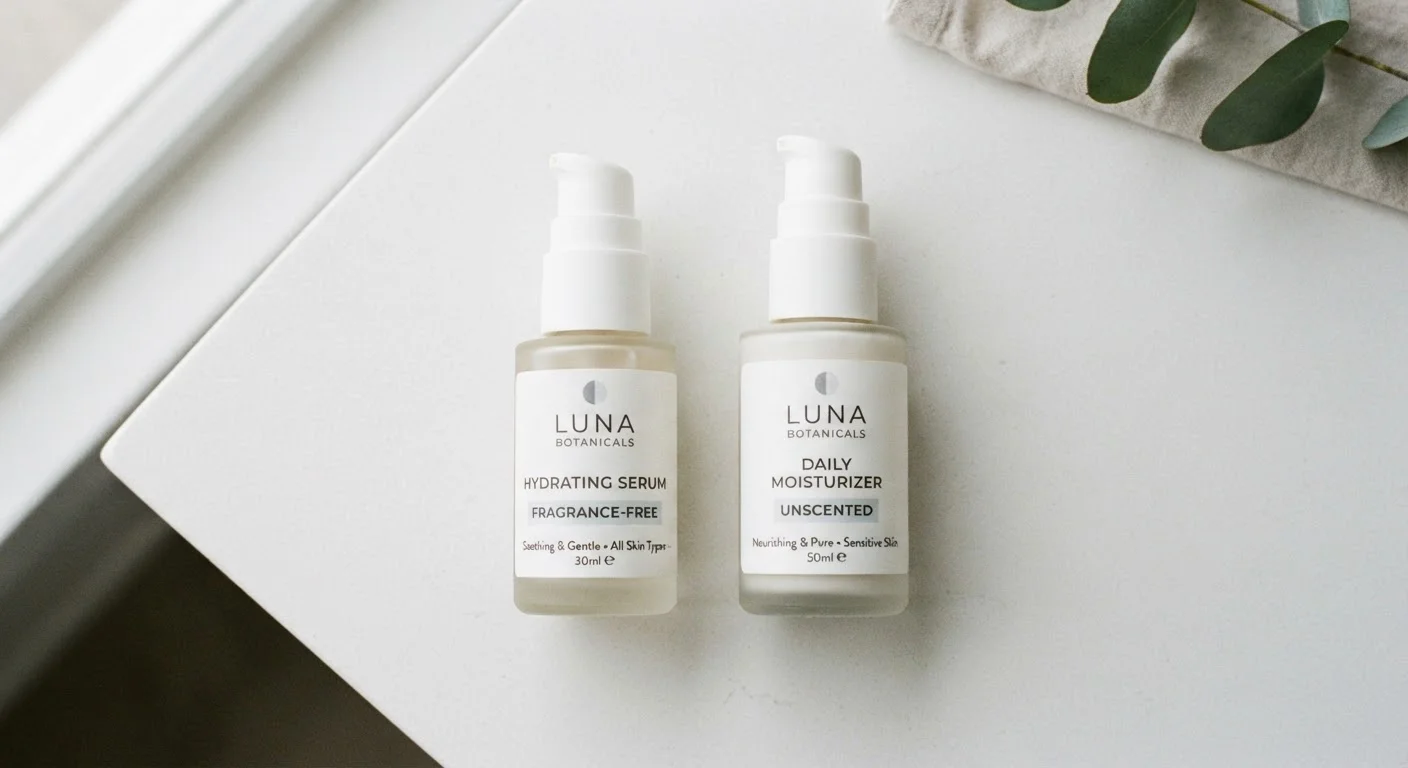
Fragrance-free means a product contains no fragrance ingredients at all, whether synthetic or natural. Unscented means the product has no detectable smell, but it may still contain masking fragrances added to neutralize the odors of other ingredients. The two terms describe different things, and choosing the wrong one can matter for sensitive skin.
Under U.S. FDA guidelines, neither term is strictly regulated for cosmetics, so manufacturers use them without uniform standards. Reading the full ingredient list is the only reliable check.
Why the distinction matters
Most shoppers assume unscented and fragrance-free point to the same thing. They do not. The gap between them is a formulation difference that can affect anyone with sensitive skin, eczema, or a fragrance allergy, and it shows up on drugstore shelves every day.
A fragrance-free product has no fragrance ingredients in its formula. An unscented product simply has no perceptible smell. To achieve that neutral odor, manufacturers sometimes add masking fragrances, chemical compounds whose purpose is to cancel out the smell of other ingredients rather than to add a scent. Those masking compounds are still fragrance ingredients, and they can still cause reactions.
For most people with healthy, non-reactive skin, the difference may never matter. For the estimated one in five Americans who experience some form of skin sensitization related to personal care products, according to general estimates from dermatology literature, picking up the wrong bottle can mean redness, itching, or a flare-up that takes days to settle.
Neither term is regulated in the same way
The U.S. FDA does not require cosmetic manufacturers to meet a specific standard before using fragrance-free or unscented on a label. Both terms are effectively voluntary marketing claims. That means two products with the same front-label claim can have very different ingredient lists. Checking the full ingredient list remains the only way to know what is actually in the formula.
What each term actually tells you about a formula
Fragrance-free tells you that no ingredient was added for the purpose of creating or altering scent. The product may still have a faint smell from its active or functional ingredients, such as certain oils or acids, but nothing was added to make it smell a particular way.
Unscented tells you about the finished product's odor profile, not its ingredient list. The manufacturer worked to produce a smell-neutral result. That can happen without any fragrance compounds, or it can happen because masking agents were used to neutralize other odors. You cannot tell which from the front label alone.
The ingredient list is where the real information lives. Look for the word parfum or fragrance, which are catch-all terms that can represent dozens of undisclosed compounds under trade secret protections in the U.S. Also watch for essential oils listed by name, such as lavender oil or citrus aurantium, and for individual aromatic compounds like linalool, limonene, or eugenol. These appear in both synthetic and natural fragrance blends, and they are among the more common contact allergens identified in cosmetic formulations.
For a broader guide to reading product labels, see our guide to drugstore skincare labels.
Natural fragrances are not automatically safer
A common assumption is that synthetic fragrance is the problem and natural fragrance is fine. The chemistry does not support that split. Many naturally derived aromatic compounds, including those from essential oils, are well-documented allergens. Fragrance mixes that include plant-based ingredients appear regularly in patch-test results for contact dermatitis.
Products marketed as clean, green, botanical, or natural can still contain fragrance ingredients that trigger reactions. The label fragrance-free is more informative than any of those marketing terms, because it describes what is absent from the formula rather than how the ingredients were sourced.
If a product is genuinely fragrance-free, its ingredient list will contain no parfum, no fragrance, no essential oils added for scent, and no isolated aromatic compounds. That is the standard worth looking for, regardless of where the ingredients originated.
Who should pay closest attention
People with eczema, contact dermatitis, or rosacea generally do better with fragrance-free products across their entire routine, including cleansers, moisturizers, and sunscreens. Reactions can be cumulative, so using unscented products that contain masking fragrances across multiple steps adds up.
Infants and young children have thinner, more permeable skin. Pediatric dermatology guidance consistently recommends fragrance-free options for baby skin care. The same logic applies to anyone recovering from a procedure, burn, or skin barrier disruption.
For everyone else, unscented products are not a problem. If your skin tolerates your current routine without any irritation, the distinction may not change anything for you. But if you have been dealing with unexplained redness or sensitivity and have already tried switching to unscented products, fragrance-free is the logical next step to try, ideally in conversation with a dermatologist who can help identify your actual triggers.
This article is for informational purposes only and is not medical advice. If you have a skin condition or suspect a fragrance allergy, consult a qualified healthcare professional.