

Key Takeaways
Where the assumption comes from
The belief that healthy food costs more has a straightforward origin: people compare the wrong things. A bag of kale placed next to a bag of chips at the register does look more expensive. A grass-fed steak next to a frozen pizza confirms the suspicion. But those comparisons select the priciest items from the nutritious category and the cheapest from the processed one.
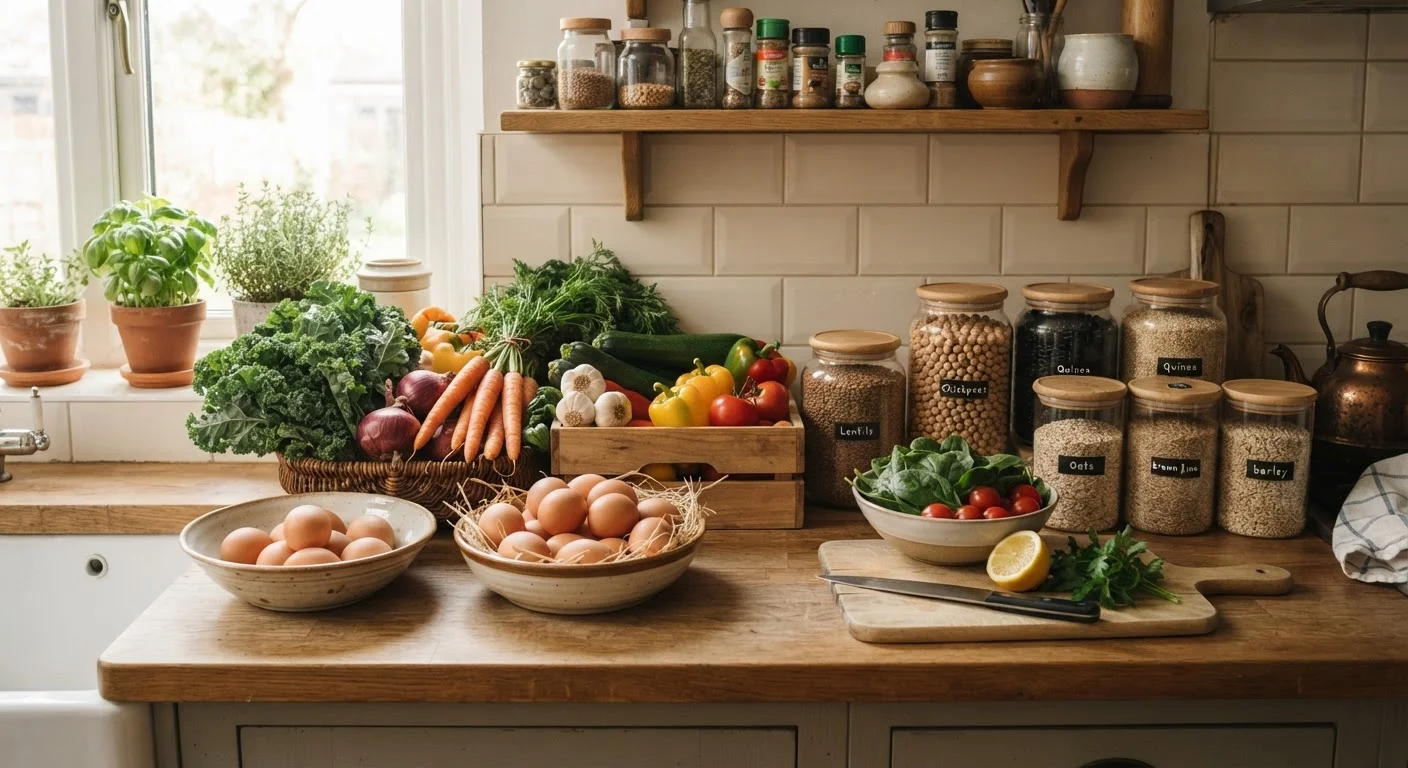
Specialty health stores, premium organic labels, and meal-kit advertising all reinforce the idea that eating well is a luxury. None of those things are necessary for a nutritious diet. When families build meals around dried beans, eggs, canned fish, whole grains, and seasonal produce, the math shifts considerably.
Cost-per-serving is the right measure
Comparing sticker prices on individual items misrepresents the true cost of eating well. A bag of dried lentils priced at $2.00 yields roughly 10 servings. A bag of chips at the same price yields two or three. Calculating cost per serving changes the picture entirely for most household staples.
The myths, examined
Several specific assumptions drive the cost perception. Each one deserves a direct look at the evidence rather than a general rebuttal.
Myth
Fresh fruits and vegetables are always more expensive than packaged foods.
Fact
Frozen and canned vegetables are nutritionally comparable to fresh and frequently cost less per serving.
Frozen vegetables are harvested at peak ripeness and retain most of their vitamins and minerals through the freezing process. A 16-oz bag of frozen broccoli or spinach typically costs $1.50 to $2.50 and provides four to six servings. Equivalent packaged snack items at the same price point deliver far fewer nutrients per dollar. Canned tomatoes, beans, and corn are similarly cost-effective options that require no refrigeration.
Fresh produce purchased in season also competes on price. Seasonal produce choices can align meal planning with lower prices and better flavor without any sacrifice in nutritional value.
Myth
Eating poorly is unavoidably cheaper for families on tight budgets.
Fact
Home-cooked meals built around whole-food staples consistently cost less per serving than fast food or packaged convenience products.
A home-cooked pot of bean and vegetable soup using dried beans, canned tomatoes, onion, and garlic can feed a family of four for under $4.00 total. The same family spending $5 to $7 per person at a fast-food counter pays $20 to $28 for a single meal that is lower in fiber, higher in sodium, and offers no leftovers. The cost gap widens further when convenience foods are purchased repeatedly across a week.
Convenience foods carry real financial and nutritional tradeoffs that families benefit from understanding before making them a routine.
Myth
Protein is the most expensive part of a healthy diet.
Fact
Eggs, canned fish, dried legumes, and plain Greek yogurt are all high-protein foods available at low cost.
A dozen eggs typically costs $2 to $3 and provides 12 servings of complete protein. A 15-oz can of chickpeas offers roughly three half-cup servings for under $1.50 and supplies both protein and dietary fiber. Dried lentils, split peas, and pinto beans extend the range further. These options are widely available at conventional grocery stores across the country, without requiring a warehouse membership or specialty retailer.
Families that shift even two or three weekly meals from meat-centered to legume-centered cooking often see measurable reductions in their grocery spending without reducing total protein intake.
Myth
You need to buy organic to eat healthy.
Fact
Nutritional benefit comes from eating more fruits, vegetables, and whole grains, regardless of whether they are certified organic.
Organic certification affects how a crop is grown, not its core macronutrient or fiber content. Conventional produce delivers the same vitamins, minerals, and dietary fiber as its organic counterpart in most comparisons. For families where budget is a constraint, purchasing conventional produce and eating more of it provides greater nutritional return than buying a smaller quantity of organic items for the same money.
Washing produce thoroughly under running water removes the majority of surface residues. This does not require any special produce wash, which is itself an added cost with limited proven benefit.
Myth
Healthy meal planning is too time-consuming for working families.
Fact
A small amount of upfront planning, such as batch cooking grains or pre-washing vegetables, reduces both weeknight cooking time and per-meal cost.
Cooking a large pot of brown rice, oats, or lentils once and storing portions in the refrigerator takes about the same time as preparing a single meal. That single session provides ingredients for three to five subsequent meals with minimal daily effort. Sheet-pan dinners using frozen vegetables, a starch, and a protein source are another approach that requires under 15 minutes of active preparation.
For families starting out, a structured introduction to budget nutrition covers pantry setup and planning strategies that reduce both time and cost together.
Specialty health foods skew the perception
Organic snack bars, grain bowls from meal-kit services, and specialty superfoods carry real premium prices. These products are marketed as healthy but are not required for a nutritious diet. Anchoring the idea of 'healthy eating' to them makes the whole category appear unaffordable, which overstates the actual cost of eating well from conventional grocery stores.
What actually drives grocery spending up
For most households, the real cost pressure in the grocery budget comes from beverages (including juice and soda), pre-cut and pre-packaged convenience items, single-serve portions, and frequent small shopping trips that invite unplanned purchases. None of these are inherently healthier than their alternatives. Juice marketed as nutritious often contains as much sugar per serving as a soft drink, at a higher price.
Pre-washed salad greens cost two to three times more per ounce than a whole head of lettuce. Individual portions of yogurt cost more per serving than a plain quart container. These format premiums add up across a week of shopping without delivering any nutritional advantage.
Families that want to go deeper on the tradeoffs involved in relying on convenience products can find a clear picture in the financial and nutritional cost of convenience foods. Reducing dependence on those products alone often frees up meaningful budget space that can redirect toward whole-food staples.
This article provides general nutrition and budgeting information and is not a substitute for personalized medical or dietary advice. Consult a qualified healthcare professional before making significant changes to your diet, particularly if you have an existing health condition.