

Key Takeaways
What handwashing actually does to germs
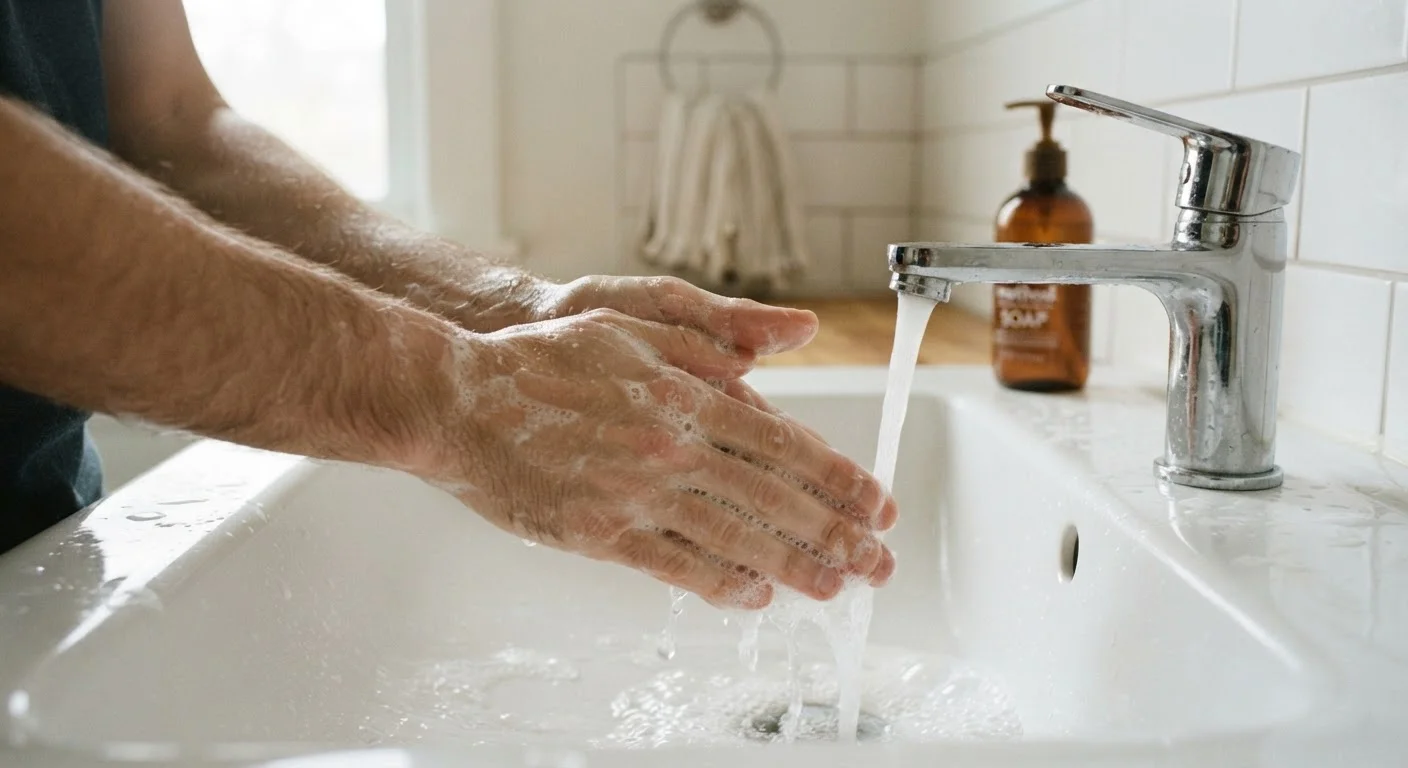
Soap does not kill bacteria and viruses the way a disinfectant does. Instead, it works mechanically. Soap molecules have one end that binds to water and another that binds to oils and fats. When you lather, those molecules surround debris, oils, and the pathogens clinging to them, so running water can rinse everything away. Many viruses, including influenza and the common cold viruses, have a lipid (fat-based) outer envelope that soap disrupts directly, which helps dislodge and inactivate them.
The friction of scrubbing matters as much as the soap itself. Rubbing all surfaces of the hands, including between fingers, under nails, and around the thumbs, physically lifts pathogens from the skin. Water alone removes some germs, but adding soap and scrubbing removes far more.
Myth
Hot water is more effective than cold water for killing germs on your hands.
Fact
Water temperature has no meaningful effect on how many germs soap and scrubbing remove.
Research published in the journal Food Protection Trends found no significant difference in microbial removal between cold, warm, and hot water when handwashing technique was otherwise identical. The water simply carries away what the soap and friction dislodge. Very hot water can actually irritate skin with repeated exposure, and damaged skin harbors more bacteria. Use a comfortable temperature and focus on technique instead.
Myth
Antibacterial soap is better than regular soap for preventing illness.
Fact
Regular soap and antibacterial soap are equally effective at reducing illness-causing germs during handwashing.
The U.S. Food and Drug Administration ruled in 2016 that manufacturers had not demonstrated that certain antibacterial ingredients, including triclosan and triclocarban, were more effective than plain soap for preventing illness. The mechanical action of washing is what removes pathogens. There is also ongoing scientific discussion about whether widespread use of antibacterial agents may contribute to antibiotic resistance over time, though that question is not fully settled. Plain soap works.
Myth
Hand sanitizer is just as good as soap and water in every situation.
Fact
Hand sanitizer is a useful backup, but it does not remove all types of pathogens that soap and water can.
Alcohol-based hand sanitizers with at least 60% alcohol inactivate many common viruses and bacteria, but they are less effective against certain pathogens. Norovirus, Cryptosporidium, and Clostridioides difficile (commonly called C. diff) are not reliably eliminated by hand sanitizer. Sanitizer also does not remove physical dirt, grease, or chemical residues. The CDC specifically recommends soap and water over sanitizer when hands are visibly dirty or when dealing with certain gastrointestinal illnesses.
Myth
A quick rinse under water is good enough if you are not near anything obviously dirty.
Fact
Germs are invisible, and rinsing without soap removes only a fraction of pathogens present on hands.
Contamination from touching surfaces, shaking hands, or handling food does not look like anything. Studies on fecal indicator bacteria have found measurable contamination on hands even when people reported no contact with obviously dirty surfaces. The CDC recommends lathering for at least 20 seconds every time, regardless of how clean your hands appear. A useful timing reference: humming the "Happy Birthday" song twice takes approximately 20 seconds.
Myth
You only need to wash your hands after using the bathroom.
Fact
Several everyday activities beyond bathroom use create meaningful opportunities for pathogen transfer.
Handling raw poultry or meat, touching your face after contact with a shared surface, blowing your nose, and caring for a sick family member all transfer pathogens to or from hands. Respiratory viruses in particular spread partly through hand-to-face contact. A 2015 study in the American Journal of Infection Control estimated that people touch their faces an average of 23 times per hour, making hand cleanliness relevant well beyond bathroom visits.
When handwashing has the biggest impact
The moments that carry the most risk of spreading illness are specific. Washing hands before preparing or eating food, after using the toilet, after blowing your nose or coughing, after touching garbage or raw meat, and after caring for someone who is sick each address a distinct transfer route for pathogens.
Children in particular benefit from consistent handwashing habits at school and at home. The CDC notes that teaching children proper handwashing can cut school absenteeism related to gastrointestinal illness. For families trying to avoid costly urgent care visits or missed workdays, the routine is genuinely practical prevention.
~30%
Reduction in diarrheal illness risk
According to the CDC, handwashing with soap can reduce the risk of diarrheal illnesses by about 30% in the general population.
~20%
Reduction in respiratory infection risk
The CDC also estimates that handwashing reduces respiratory infections, including colds, by roughly 16 to 21% depending on the population studied.
60%
Minimum alcohol for effective sanitizer
The CDC recommends using hand sanitizers containing at least 60% alcohol when soap and water are not available.
This article is for general health information only and is not a substitute for advice from a qualified healthcare professional. If you or a family member has symptoms of illness, consult a doctor or other licensed provider.