

Eat Well, Spend Less

The Weekly Grocery List That Cuts Waste and Stretches Nutrition Further

Share
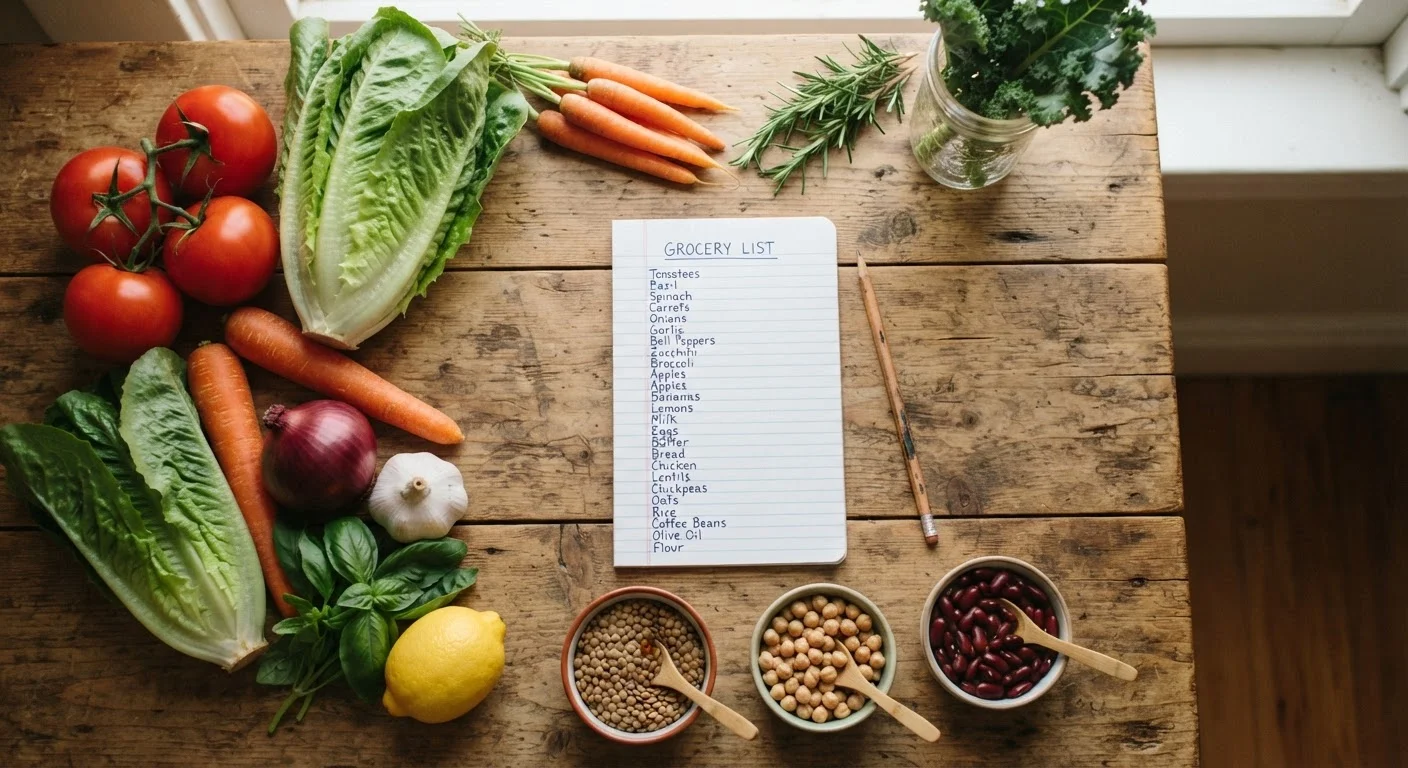
Handwritten weekly grocery list on a table surrounded by fresh vegetables and pantry staples

Key Takeaways

A structured grocery list prevents impulse purchases that inflate spending without improving nutrition.
Organizing items by food category reduces in-store time and helps maintain nutritional balance.
Checking pantry inventory before building a list cuts duplicate purchases and food waste.
Planning meals first means every item on the list has a purpose, reducing spoilage.
Seasonal produce is generally lower in cost and higher in nutrient density than off-season alternatives.
20–40 min

Summary

22 items · 20 to 40 minutes

Why the list matters before you shop

Most grocery overspending and food waste share a common cause: shopping without a clear plan. When there is no list, or the list is incomplete, families tend to buy what looks appealing rather than what their meals actually need. The result is duplicate pantry items, unused produce that spoils mid-week, and a cart full of food that does not add up to coherent meals.

A well-structured list solves that. It connects what your family will eat to exactly what you need to buy, in the quantities that make sense. It also makes nutritional balance visible: if your list has no leafy greens, no legumes, and three types of snack crackers, that imbalance is easy to spot and correct before you spend anything.

This checklist walks through the full process of building a weekly grocery list that is grounded in your actual meal plan, organized by food category, and sized to your household. The meal planning framework for families of four pairs directly with this process if you are building both at once. For a broader foundation on eating well without overspending, see the beginner's guide to nutrition on a tight budget.

Preparation before you write

Check your refrigerator, freezer, and pantry before adding anything to the list to avoid buying duplicates. Must
Write out the meals you plan to cook this week, including lunches and breakfasts, not just dinners. Must
Note which ingredients those meals share so you can buy one item that serves multiple recipes. Must
Check the weekly store circular or app for produce and protein markdowns before finalizing meals. Should
Identify any items you are nearly out of that are not tied to a specific meal but are household staples. Should

Produce and fresh items

Choose at least two leafy greens or cruciferous vegetables to cover multiple meals across the week. Must
Select seasonal produce where possible, as it is typically lower cost and at peak nutrient density. Should
Add at least one starchy vegetable such as sweet potato or winter squash to anchor filling meals. Should
Include fruit in quantities your household will realistically eat before it spoils, not aspirational amounts. Must
Consider frozen vegetables as a backup for any fresh item with a short shelf life to reduce mid-week spoilage. Nice to have

Proteins and dairy

Include at least one plant-based protein such as dried beans, lentils, or canned chickpeas to lower cost per serving. Must
Add eggs if your household uses them; they remain one of the most affordable complete proteins available. Should
Choose whole-muscle cuts or bone-in poultry over processed deli meats when buying animal protein on a budget. Should
Include plain dairy such as yogurt or milk only in quantities that align with planned meals to avoid waste. Must

Pantry and shelf-stable items

Restock whole grains such as oats, brown rice, or whole wheat pasta only when stock is genuinely low. Must
Add canned tomatoes, broth, or beans if they appear in this week's recipes and your supply is depleted. Should
Check cooking oil, salt, and basic dried spices, and add only what is running low. Should

Final review before shopping

Read through the complete list and confirm every item connects to a specific meal or a genuine household need. Must
Remove or reduce quantities for any highly perishable item your household historically does not finish. Must
Group list items by store section (produce, protein, dairy, pantry) to minimize in-store backtracking. Should
Set a rough per-category spending ceiling to catch any section that is over-weighted before you arrive at the store. Nice to have
Take a photo of what is in your refrigerator before leaving so you can verify quantities while shopping. Nice to have

Tools that make the process faster

You do not need specialized software to build a good grocery list, but a few basic tools reduce friction and help you stay consistent week after week.

Required

Notepad or reusable list pad

A paper list by category is fast to write, easy to hand off to another family member, and does not require a phone battery.

Optional

Grocery list app

A shared app lets multiple household members add items through the week as they notice something running low.

Required

Weekly meal plan template

A simple grid of breakfasts, lunches, and dinners makes it easy to extract exactly what ingredients you need.

Optional

Store layout map or section groupings

Knowing your store's section order lets you build a list that flows with the physical layout, reducing backtracking.

How to use this checklist each week

Run through the preparation steps before you write a single item. Knowing what is already in your kitchen prevents buying a second bag of lentils when you have one unopened at the back of the shelf. Once you have done the pantry check and sketched out your meals, filling the list by category takes less than ten minutes.

Organize your final list to match the physical layout of your usual store. Grouping produce together, then proteins, then shelf-stable items means fewer backtracking trips through the aisles. That matters less for online orders, but for in-person shopping it cuts time and reduces the chance of spotting something tempting in an aisle you had no reason to visit.

If food waste is a recurring problem in your household, the reasons your grocery budget fails before the week ends covers the planning errors that cause it most often. For families who want to take efficiency further, batch cooking on a single afternoon extends the value of a well-planned grocery run across the whole week.

Buying in bulk does not always save money

Bulk purchases lower the unit price but only save money if the item gets fully used. For perishable items, buying more than your household will consume before spoilage erases any price advantage. Apply bulk buying to shelf-stable staples your family uses regularly, and keep quantities realistic for fresh and frozen items.

This article is for general informational and educational purposes only. It is not a substitute for advice from a registered dietitian or other qualified health professional. Consult a healthcare provider for guidance specific to your family's nutritional needs or health conditions.

Eat Well, Spend Less Editorial Team is the collective byline for our editorial team and contributor network. Articles published under this byline or an editorial pen name are researched, written, and reviewed according to our editorial standards for clarity, consistency, and independence before publication.

View all articles by Eat Well, Spend Less Editorial Team →
Disclaimer: The content provided on our blog site traverses numerous categories, offering readers valuable and practical information. Readers can use the editorial team’s research and data to gain more insights into their topics of interest. However, they are requested not to treat the articles as conclusive. The website team cannot be held responsible for differences in data or inaccuracies found across other platforms. Please also note that the site might also miss out on various schemes and offers available that the readers may find more beneficial than the ones we cover.