

Key Takeaways
Why batch cooking works for families
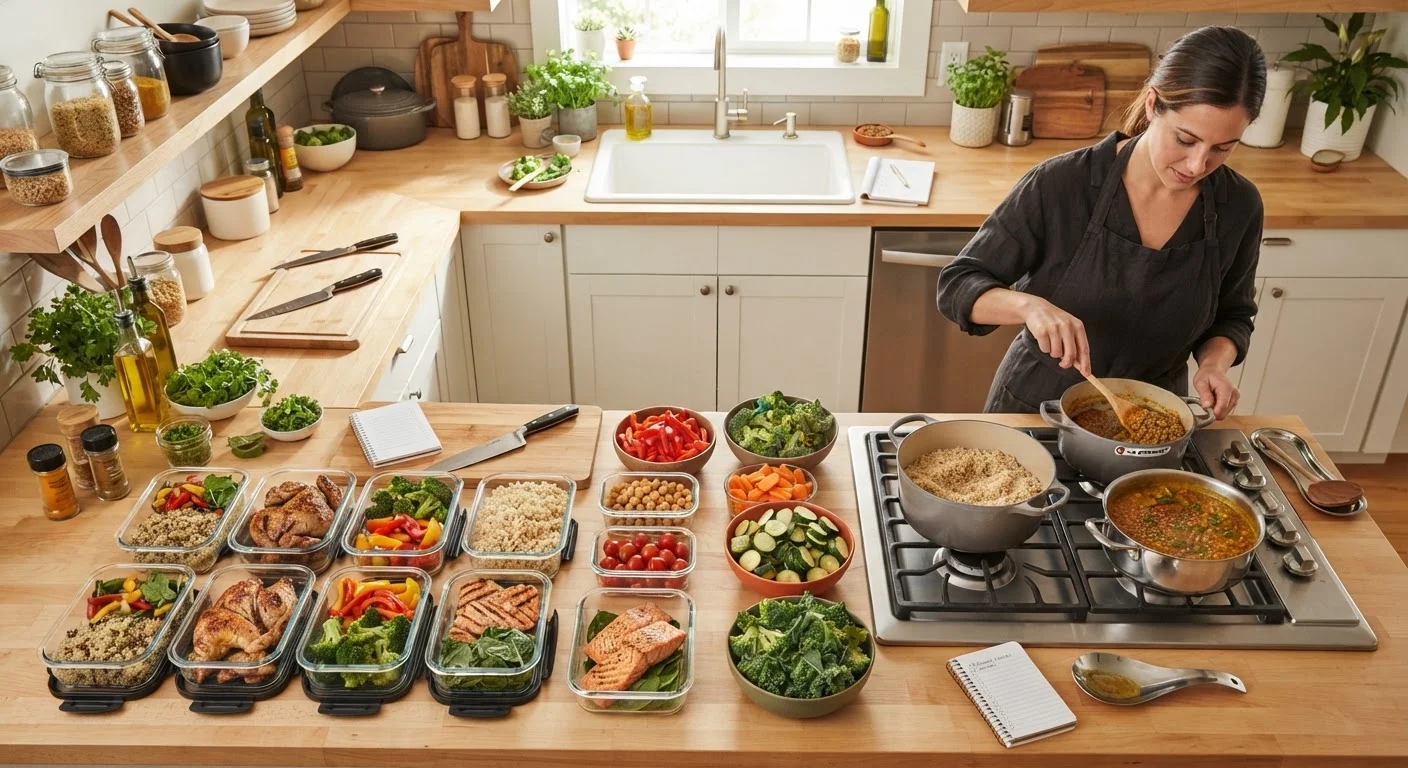
Weeknight dinner pressure is real. After school pickups, work, and activities, most families do not have 45 minutes to cook from scratch. Batch cooking moves most of that work to a single block of time, usually a Sunday afternoon, so weeknights become assembly rather than cooking.
The nutritional payoff is straightforward: when cooked food is already in the refrigerator, families are less likely to rely on heavily processed convenience options. A pot of cooked lentils or a tray of roasted vegetables costs a fraction of a fast-food meal and delivers far more fiber, protein, and micronutrients per dollar.
If you want a framework for planning what to cook before you batch, the weekly meal planning guide for families walks through how to structure a full week of meals on a tight budget.
Batch cooking does not require an entire Sunday
A focused three-hour session works for most families. If that still feels long, split it: cook grains and beans Saturday evening, then roast proteins and vegetables Sunday afternoon. Two shorter blocks often fit a busy weekend schedule better than one long one.
What to cook and what to buy
Effective batch cooking depends on choosing ingredients that work across multiple meals. Think in three categories: a protein, a grain or starch, and two to three vegetables. Cooking each component separately gives you the flexibility to combine them differently each night.
Dried beans and lentils are among the most cost-efficient proteins available. One pound of dried black beans, cooked in a large pot, yields roughly six cups of cooked beans. Brown rice, farro, and oats are similarly high-yield grains. For animal protein, bone-in chicken thighs and eggs tend to offer the most nutrition per dollar at most US grocery stores.
Buying produce in season cuts costs considerably. The guide to seasonal produce and grocery savings shows how to match what you cook to what costs less each month. Before you shop, build a precise grocery list: the weekly grocery list framework helps prevent impulse buys and reduce food waste.
What you will need
How to structure your batch cooking session
The steps below assume one adult cooking, a standard four-burner stove, and a single oven. Adjust timing if you have more equipment or help.
Write a simple meal map before you shop
List five dinners for the week and identify every component each meal needs. Mark which components appear in more than one meal: those are your batch priorities. A meal map also tells you exactly how much of each ingredient to buy, so you avoid both shortfalls and excess.
Start the longest-cooking items first
Dried beans can take 60 to 90 minutes on the stovetop. Brown rice takes about 45 minutes. Whole chicken thighs in the oven take 35 to 40 minutes. Load these into their pots and pans first, then fill the remaining time with prep work for faster items. Parallel cooking is the single biggest time saver in a batch session.
Roast two sheet pans of vegetables simultaneously
Cut vegetables into similar-sized pieces so they cook evenly. Use two sheet pans and roast at 400 to 425 degrees Fahrenheit. Aim for at least two different vegetable types across the two pans to give yourself variety. Roasted sweet potato, broccoli, zucchini, and cauliflower all hold well in the refrigerator without becoming soggy.
Cook and season proteins plainly
Season batch proteins simply: salt, pepper, and perhaps garlic. Heavy, specific marinades limit how many different meals you can build from the same protein. A plainly cooked chicken thigh can go into a taco, a grain bowl, a soup, or a pasta without the flavor fighting the dish.
Cool, portion, label, and refrigerate
Allow cooked food to cool at room temperature for no more than two hours before refrigerating. Divide each component into portions sized for your family, label containers with the item name and the date, and stack them in the refrigerator so the current week's food is at eye level. Set aside any portions you will not use within four to five days and freeze them immediately.
Storing and using what you cook
Proper storage determines whether batch cooking actually reduces weeknight work. Cooked grains and beans keep for up to five days in airtight containers in the refrigerator. Cooked chicken lasts three to four days. Roasted vegetables hold well for three to four days. If your week runs longer than that, freeze portions on cook day rather than waiting for them to age.
Label every container with the contents and the date. That habit takes ten seconds and prevents the guessing game that leads to throwing food away. The U.S. Department of Agriculture's food safety guidelines are a reliable reference for safe storage times.
On weeknights, combine components with different sauces, spices, or fresh toppings to vary the flavor so the same base ingredients do not feel repetitive. Cooked rice becomes a grain bowl with roasted vegetables and a fried egg, then the next night it anchors a stir-fry with whatever fresh vegetables need using up.
For families managing both cooking and physical activity schedules, the beginner's guide to family nutrition on a tight budget covers the broader strategy that batch cooking fits into.
This article is for general informational purposes only. It is not a substitute for advice from a registered dietitian or other qualified nutrition professional. Food safety guidance should be verified against current recommendations from relevant authorities such as the USDA.