

Key Takeaways
Why seasonal produce costs less
When a crop is harvested at its regional peak, supply rises sharply. Stores receive more volume, transportation distances are often shorter, and less refrigeration is needed to keep produce shelf-stable. All of that reduces what families pay per pound at checkout.
The contrast is easy to see. A pound of Roma tomatoes in July often costs a fraction of what it does in January, when tomatoes arrive by truck from distant growing regions. The same pattern holds for zucchini in summer, butternut squash in fall, and cabbage in winter.
Nutrition tracks closely with cost here. Fruits and vegetables picked closer to full ripeness generally retain more of their vitamins and antioxidants than produce harvested early for long-distance shipping. So buying in-season is a double gain: lower price and better nutritional quality.
For a broader look at how to stretch the grocery budget across all food categories, see our beginners guide to family nutrition on a budget.
A practical seasonal map for families
You do not need to memorize a regional agricultural calendar. A simpler approach: walk the produce section and notice what is stacked in large quantities near the entrance at full display price. Stores typically feature what costs them less to stock.
As a general guide for most US regions:
- Spring: asparagus, peas, spinach, strawberries, radishes
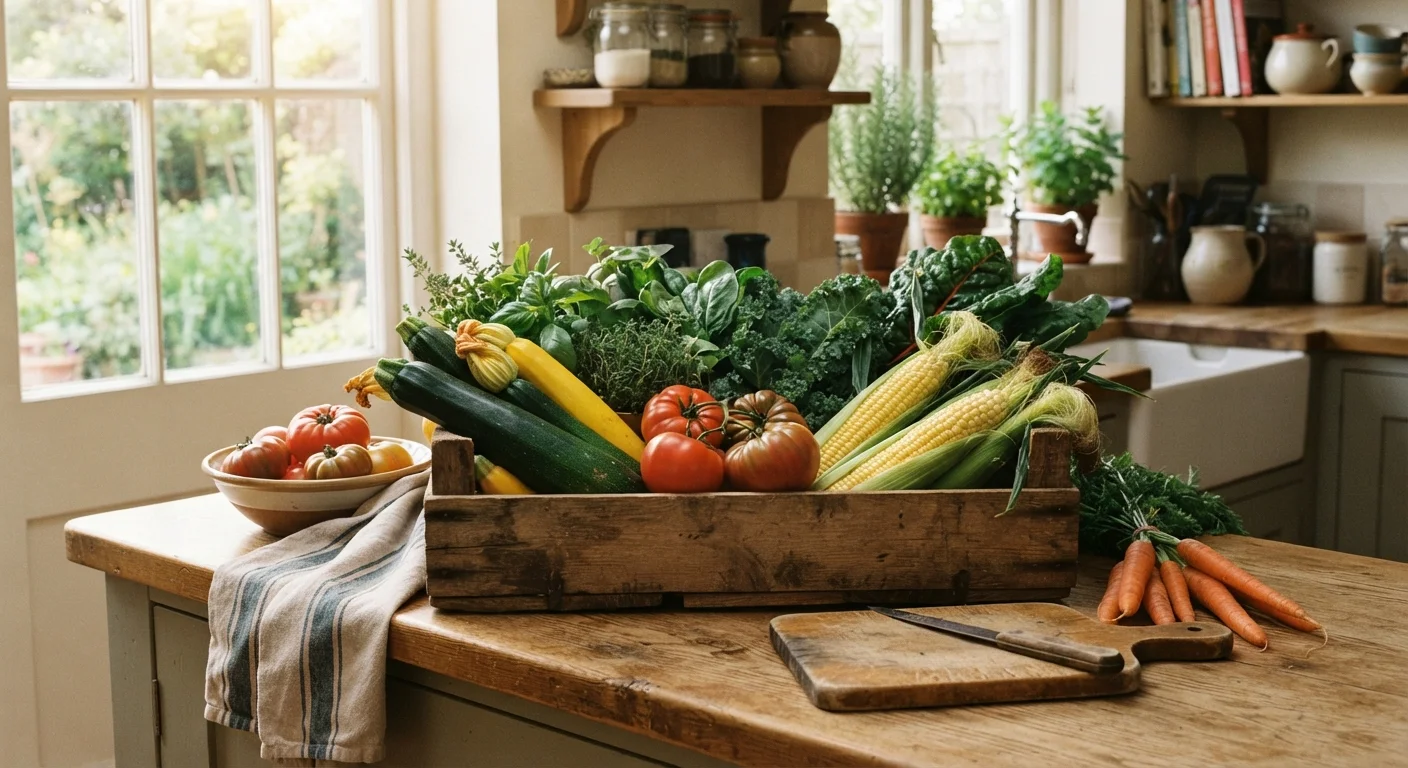
- Summer: corn, tomatoes, cucumbers, bell peppers, peaches, berries, zucchini
- Fall: winter squash, broccoli, cauliflower, apples, sweet potatoes, Brussels sprouts
- Winter: cabbage, carrots, citrus fruits, kale, turnips, onions
These windows overlap and shift by region, so use this as a starting point rather than a fixed rule. Families in California or Florida will see different patterns than those in the Midwest or Pacific Northwest.
If you grow any of your own food, pairing that with grocery shopping sharpens the savings further. The seasonal planting calendar for home gardeners offers a region-flexible schedule for timing your harvests.
Stretching seasonal produce beyond its peak
One of the most effective ways to get full value from seasonal pricing is to buy in bulk during peak weeks and preserve the excess. Blanching and freezing summer corn or green beans takes about 30 minutes and extends their use by months. Batch-roasting fall squash and storing it in the freezer cuts prep time on weeknight meals significantly.
Frozen produce bought at grocery stores is another sound option when fresh is off-season or overpriced. Flash-freezing at harvest preserves most water-soluble vitamins, which means peas or spinach from the freezer section in January can be nutritionally comparable to fresh. The science behind fresh vs. frozen vegetables is worth understanding before assuming fresh is always the better buy.
For families who cook in volume, batch cooking on a single afternoon is a practical way to lock in seasonal ingredients at their cheapest and turn them into multiple dinners.
Fitting seasonal produce into weekly meal planning
The most direct way to save money on produce is to let price drive the menu rather than letting the menu drive the shopping list. When zucchini is abundant and cheap, plan stir-fries, frittatas, and soups that feature it. When sweet potatoes drop in price, build sheet-pan dinners and grain bowls around them.
This approach pairs well with a weekly budget framework. Allocate a fixed amount for produce, then fill that budget with whatever is in season rather than committing to specific items before you reach the store. You may spend the same dollars but bring home more food.
Pairing seasonal produce with affordable pantry staples, including whole grains and legumes, extends each ingredient further. A half-pound of kale in fall becomes a more filling meal when served over brown rice or barley. See whole grains on a budget for how to stock those pantry anchors cost-effectively.
For a complete framework that ties produce decisions to a weekly spending target, the meal planning guide for a family of four under $100 a week covers the structure in detail.