

| Cool-season sowing window | 4 to 6 weeks before last spring frost |
| Warm-season transplant window | 1 to 2 weeks after last spring frost |
| Minimum soil temp for warm-season crops | 60 degrees Fahrenheit |
| Fall planting anchor | First expected fall frost date minus crop days-to-maturity |
| Succession sowing interval | Every 2 to 3 weeks for continuous harvest |
| Free frost date source | Your local cooperative extension office |
Why timing matters for your garden budget
Planting at the wrong time wastes seeds, kills transplants, and pushes you to buy replacements. A simple seasonal calendar helps you avoid those losses before they happen. When you sow seeds during the right window for your region, germination rates improve and plants need less intervention to survive. That means fewer do-overs and less money spent correcting mistakes.
This guide organizes common vegetables by season and growth type so you can plan a full year of planting with a single reference. It pairs well with decisions about starting from seed or buying transplants, since timing affects which option makes sense.
Because frost dates vary across the United States, this calendar uses relative timing rather than fixed months. Find your average last spring frost date and first fall frost date, then use those as anchors for every window listed here. Your local cooperative extension office can provide those dates at no cost.
| Cool-season sowing window | 4 to 6 weeks before last spring frost |
| Warm-season transplant window | 1 to 2 weeks after last spring frost |
| Minimum soil temp for warm-season crops | 60 degrees Fahrenheit |
| Fall planting anchor | First expected fall frost date minus crop days-to-maturity |
| Succession sowing interval | Every 2 to 3 weeks for continuous harvest |
| Free frost date source | Your local cooperative extension office |
Cool-season crops: early spring and fall
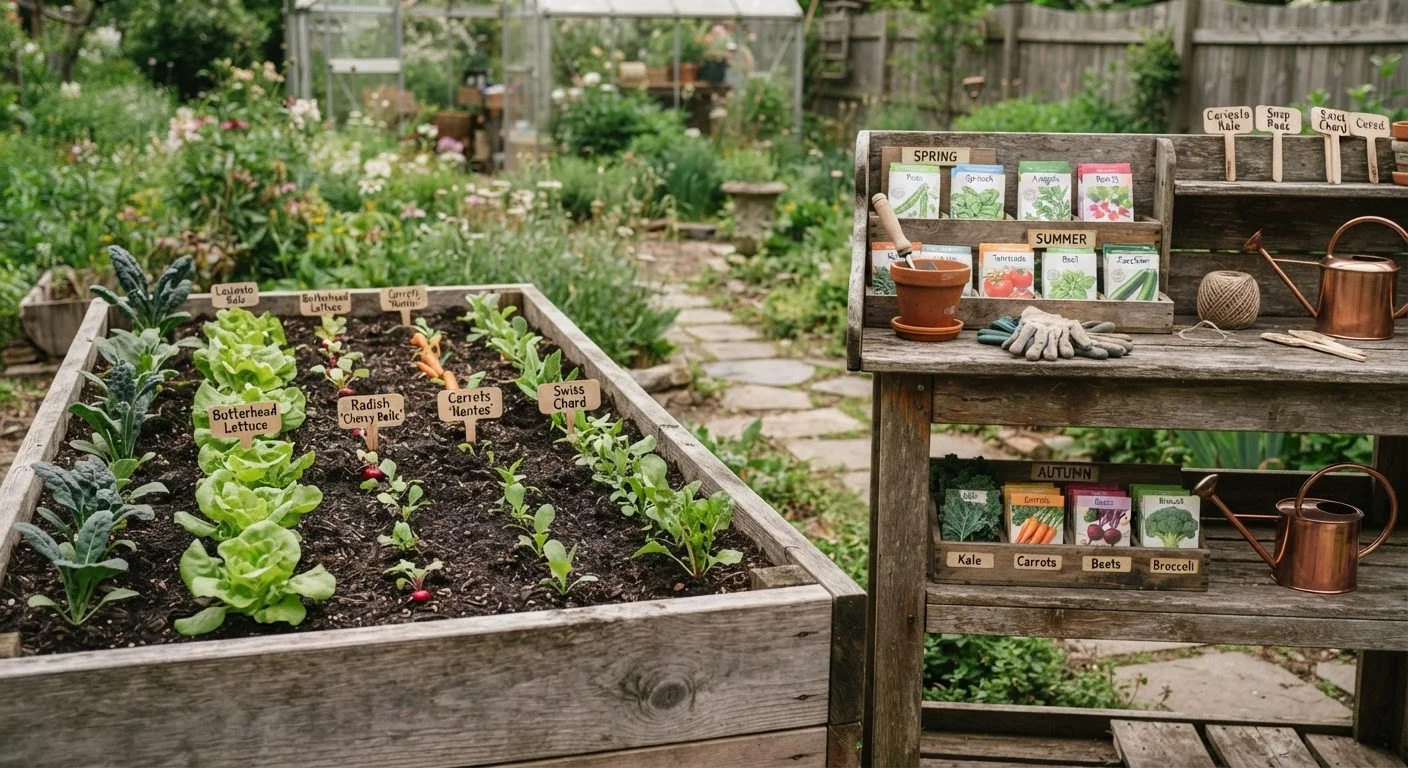
Cool-season vegetables tolerate light frost and grow best when soil temperatures stay between 45 and 75 degrees Fahrenheit. Planting them in the right window lets you harvest before summer heat forces them to bolt, and again in fall after temperatures drop.
Spring window: Sow seeds or set transplants outdoors 4 to 6 weeks before your last expected frost. Crops in this group include lettuce, spinach, kale, Swiss chard, radishes, peas, broccoli, cauliflower, and cabbage.
Fall window: Count backward from your first expected fall frost. Leafy greens and radishes need 30 to 45 days; broccoli and cabbage need 60 to 90 days. Start those longer-season crops in midsummer to hit your window. A fall garden extends your harvest season without any extra soil prep costs since the bed is already established.
Peas and spinach are among the most cost-effective crops to direct sow because transplants are rarely sold and seeds are inexpensive. See our article on vegetables that give you the most food per dollar for a fuller look at high-yield options.
Warm-season crops: after the last frost
Warm-season crops need frost-free nights and soil temperatures above 60 degrees Fahrenheit to thrive. Setting them out too early stunts growth or kills plants outright, which is one of the most common causes of unnecessary replanting costs.
Transplant timing: Tomatoes, peppers, and eggplant go in the ground 1 to 2 weeks after your last frost date, once nighttime temperatures consistently stay above 50 degrees. Starting these indoors 6 to 8 weeks before transplant day saves money compared to buying seedlings, though it does require a bright window or inexpensive grow light.
Direct sow timing: Cucumbers, squash, beans, and corn are sown directly in the soil around your last frost date or just after. These crops germinate quickly in warm soil and rarely benefit from indoor starting. Beans in particular produce a large harvest relative to the cost of a seed packet.
If you garden in containers, warm-season crops are especially well suited to portable setups you can move indoors during a late cold snap. Our guide to container gardening in small spaces covers how to do this without spending much on supplies.
Year-round planning: overlapping your planting windows
The biggest savings come from keeping your garden productive across multiple seasons rather than growing only in summer. Succession planting, where you sow small batches every 2 to 3 weeks instead of all at once, spreads the harvest and reduces waste because you are not overwhelmed with produce at one time.
Perennial vegetables such as asparagus, rhubarb, and certain herbs come back each year without replanting, which cuts annual seed and transplant costs significantly. Our piece on perennials vs. annuals for garden budget planning explains how to balance both plant types for the lowest long-term spending.
At the end of each season, collect seeds from open-pollinated varieties before pulling spent plants. Even saving seeds from one crop, such as tomatoes or beans, can eliminate that seed cost entirely next year. The process is simpler than many beginners expect. Our seed-saving walkthrough covers each step.
Growing what your household actually eats also connects directly to grocery spending. Aligning your garden calendar with your family's meals means more of what you harvest gets eaten rather than wasted. Matching what you grow to seasonal eating patterns is one practical way to close that loop.