

Key Takeaways
Container gardening
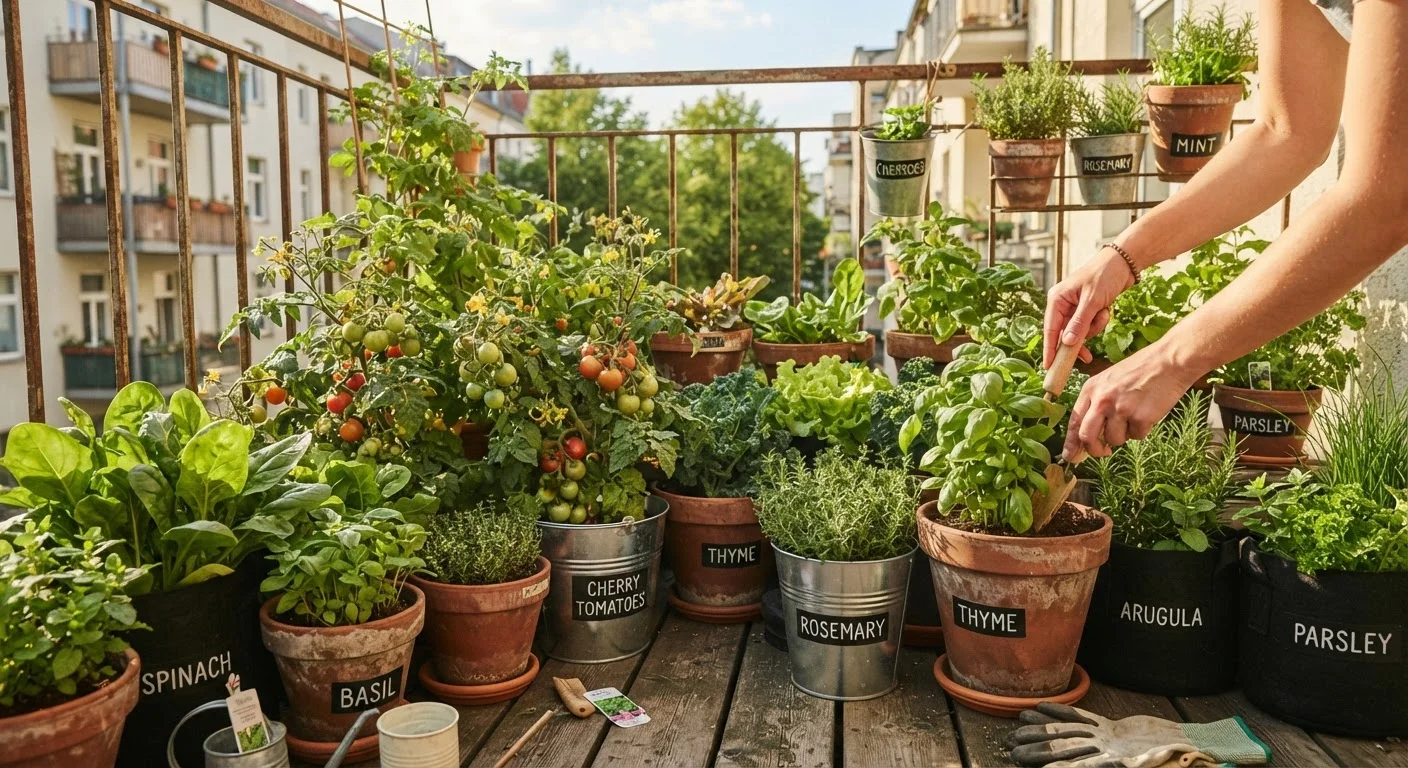
Container gardening means growing plants in pots, buckets, boxes, or any other vessel instead of directly in the ground. It works on patios, balconies, windowsills, and driveways, making it practical for renters, apartment dwellers, or anyone with limited outdoor space. Containers also give you direct control over soil quality, drainage, and sun exposure.
Any container used for edible crops should be food-safe and have drainage holes at the bottom; standing water is the most common cause of root rot in container-grown plants.
Why containers make sense for small-space and budget growers
Container gardening removes two of the most common barriers to growing food: owning land and having good native soil. A five-gallon bucket on a fire escape and a raised bed in a suburban backyard can produce comparable harvests of cherry tomatoes given the same sunlight and care.
The cost barrier is also lower than most beginners assume. Containers, potting mix, and seeds represent the entire startup list. There are no ground-breaking tools, no tilling costs, and no landscaping needed. For renters especially, containers move with you, which means any money you spend on soil and equipment stays useful at the next address.
Container gardening also pairs well with budget-minded food strategies. Growing even a portion of your household herbs and salad greens at home can reduce how often those items appear on a grocery receipt. See our Eat Well, Spend Less hub for related ideas on keeping food costs down.
Choosing containers without spending much
The container itself is usually the easiest place to save money. Food-safe five-gallon buckets, large plastic storage totes, wooden crates, and even cloth laundry bags all work. The only requirements are adequate volume for the crop, at least one drainage hole at the bottom, and material that has not been used to store chemicals.
Depth matters more than width for most vegetables. Lettuce and herbs do fine in six to eight inches of soil. Tomatoes and peppers need at least twelve inches, and carrots need closer to fourteen. A container that is too shallow will stress roots before the plant has a chance to produce.
If you do buy containers, unglazed terracotta pots are inexpensive and breathe well, but they dry out faster than plastic. Fabric grow bags have become popular because they air-prune roots and fold flat for storage. Neither is inherently better; both work when watered consistently.
Drill drainage holes before you fill
It takes about two minutes to drill or punch drainage holes in a plastic container, but skipping that step usually kills the plant within a few weeks. Aim for at least three to four holes in the bottom of any container wider than eight inches. A layer of gravel at the base is not necessary and can actually trap water just above the gravel line.
Soil and feeding on a budget
Potting mix is not the same as garden soil or topsoil, and using the wrong type is one of the most common beginner mistakes. Standard potting mix is formulated to drain well inside a container, stay loose enough for roots to spread, and hold some moisture between waterings. Bagged options are inexpensive per container when purchased in larger quantities.
Stretching that mix with homemade compost is a reliable way to reduce how much you buy. Even a small compost bin fed with kitchen scraps and dried leaves can supply a meaningful portion of what your containers need. Building healthy soil without expensive products covers compost and amendment strategies in more depth.
Container plants lose nutrients faster than in-ground plants because water carries those nutrients out through drainage holes every time you water. A diluted liquid fertilizer applied every two to three weeks keeps leafy greens and fruiting crops productive without requiring expensive slow-release granules.
Which crops give the most return in containers
Some crops are simply better suited to containers than others. High-yield, fast-maturing vegetables let you harvest more times per season from the same pot.
- Lettuce and other salad greens can be cut at the outer leaves repeatedly over several weeks.
- Radishes mature in around 25 days, so a single container can produce multiple successions in one season.
- Bush beans produce well in a twelve-inch pot and do not need staking.
- Compact or determinate tomato varieties bred for containers produce a full crop without sprawling.
- Herbs such as basil, parsley, and chives produce continuously when harvested regularly.
For a fuller look at which vegetables deliver the most food per dollar of garden investment, see vegetables that give the most food per dollar spent. Timing your plantings correctly also reduces waste; a seasonal planting calendar for budget gardeners can help you plan successions without overbuying seeds.
6+ hours
Daily sunlight most food crops need
The University of Illinois Extension notes that most fruiting vegetables require at least six hours of direct sunlight per day to produce a useful harvest.
5 gallons
Minimum container size for tomatoes
Most cooperative extension services recommend a minimum of five gallons of soil volume for compact tomato varieties grown in containers.
25 days
Days to harvest for fast radish varieties
Some radish varieties can be ready to harvest in as few as 25 days from sowing, making them one of the fastest-turnaround crops for containers.
Watering and daily maintenance
Containers dry out faster than in-ground beds because they hold a smaller volume of soil and are exposed to air on multiple sides. In warm, sunny weather, small pots may need water twice a day. Larger containers dry out more slowly and are more forgiving for growers who travel or have irregular schedules.
The simplest way to check moisture is to push a finger about an inch into the soil. Dry at that depth means water now; still damp means wait. Overwatering is as harmful as underwatering. Yellowing leaves on a plant sitting in soggy soil usually point to root rot from poor drainage or too-frequent watering.
Grouping containers together slows moisture loss because plants shade one another's soil. Setting pots on trays catches drainage water, which roots can slowly draw back up between waterings, though the tray should never sit full for more than a day or two.
How container gardening compares to other approaches
Container gardening costs less to start than raised beds, which require lumber, hardware, and significant soil volume to fill. Raised bed gardening costs and tradeoffs covers that comparison in detail for growers considering a larger setup.
In-ground gardening can produce more food per hour of labor once the soil is established, but it requires space, workable native soil, and often amendments during the first few seasons. Containers sidestep native soil problems entirely, which makes them practical even in urban areas with contaminated or compacted ground.
For growers who have some outdoor space and want to plan beyond a single season, mixing perennial plants with annual container crops can reduce what you spend replanting. Perennials vs. annuals for garden budget planning walks through how that balance works.