

Key Takeaways
Our Verdict
Neither perennials nor annuals win outright on cost. Perennials save money over multiple seasons because you stop buying the same plants repeatedly, but they require patience and a higher initial investment. Annuals give you seasonal control and lower upfront entry, making them practical for beds you want to change or for gardeners just starting out. A garden that blends both types tends to give families the most value across time.
| Best for | Recommended |
|---|---|
| Gardeners focused on reducing yearly replanting costs | Perennials |
| Those who want seasonal flexibility or are working with limited starting funds | Annuals |
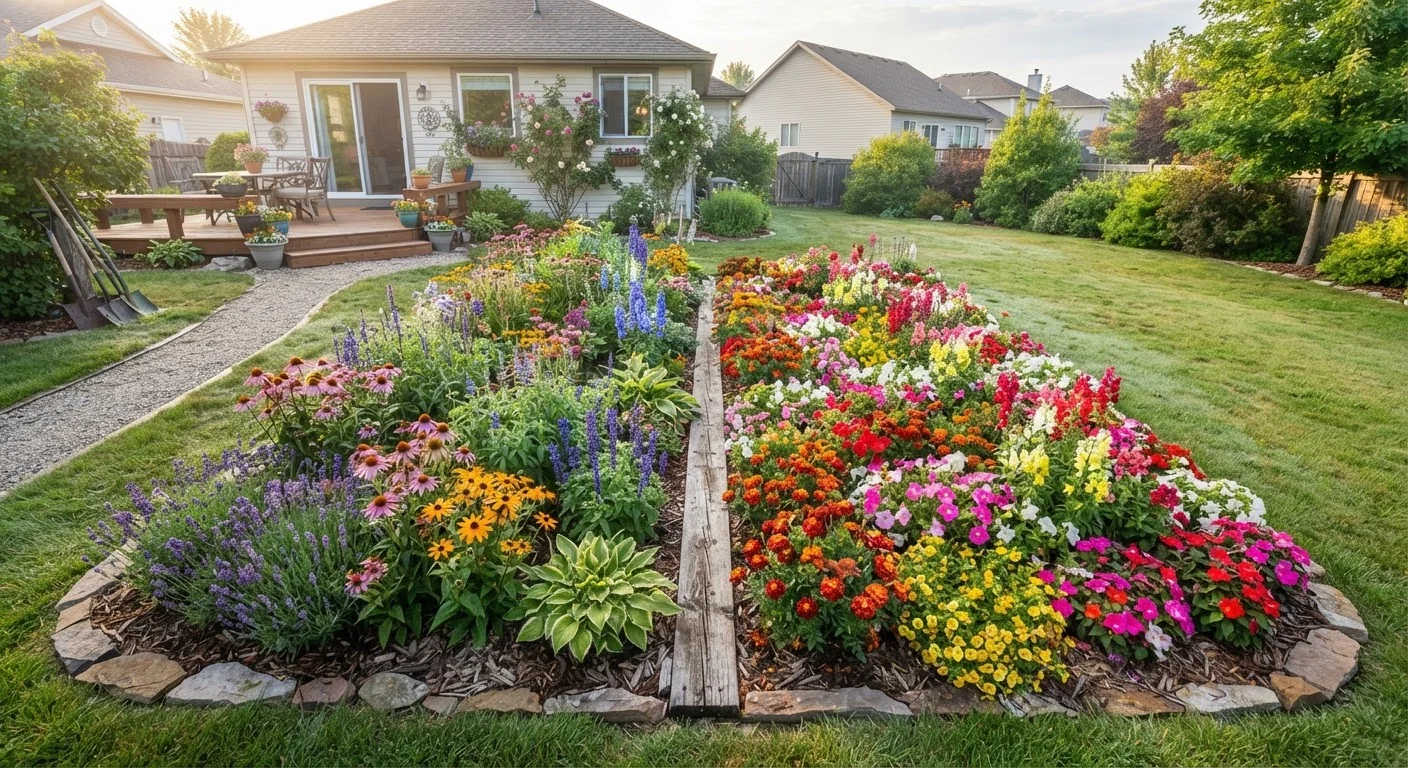
| Most home gardeners looking to balance cost and color | A mixed perennial and annual planting plan |
What the terms actually mean for your wallet
A perennial is a plant that lives for more than two years, dying back in winter (in most climates) and regrowing from its roots each spring. An annual completes its full life cycle in one growing season and does not return the following year without replanting.
From a spending perspective, perennials ask you to pay more per plant at purchase but spread that cost across several seasons. Annuals tend to cost less per plant at the nursery, but you pay that price again every spring. Over three or four years, a perennial bed almost always costs less per season than the same space replanted with annuals each year.
That math changes if a perennial dies in its first winter because it was not suited to your climate or soil. A dead plant is a full loss. This is why matching plants to your hardiness zone and local conditions is the most important cost-control step you can take before buying anything. The USDA Plant Hardiness Zone Map is a free public resource that helps with this.
Where annuals still make sense on a budget
Annuals are not a bad financial choice in every situation. A few scenarios where they genuinely work in your favor:
- You are gardening in containers or raised beds that you rotate seasonally. Annuals give you the option to change what you grow without being locked into permanent plantings. See our raised bed cost guide for more on that tradeoff.
- You want to fill gaps in a perennial bed while those plants mature. Annuals fill space and add color during the years your perennials are still establishing themselves.
- You are starting a new garden with a tight first-year budget. A flat of annual seedlings can cost less than a handful of perennial transplants, letting you learn your space before committing to plants that will stay put.
Starting annuals from seed rather than buying transplants cuts costs further. Our comparison of seeds vs. transplants covers when each approach makes financial sense.
| Perennials | Annuals | |
|---|---|---|
| Upfront cost per plant | Higher (typically $4 to $15+) | Lower (typically $1 to $5) |
| Cost over 3 to 5 years | Lower: no annual repurchase | Higher: repurchased every year |
| Flexibility to change the garden | Low: plants stay put | High: new choices each season |
| Time to full look | 1 to 3 years to fill in | Full display in one season |
| Free expansion method | Division every 3 to 5 years | Seed saving at season end |
| Risk if plant fails | Higher: multi-year investment lost | Lower: one season's cost lost |
| Maintenance level | Low once established | Moderate: replant each year |
How perennials pay for themselves over time
The most direct way perennials save money is simple: you stop buying them again. A well-sited perennial can live for a decade or more. Coneflowers, daylilies, hostas, and black-eyed Susans are common examples that reliably return in most U.S. climates with minimal care.
Dividing perennials adds another layer of savings. Most clump-forming perennials need to be divided every three to five years anyway to stay healthy. When you divide them, you get two or more plants from one, expanding your beds at no cost. Those divisions can fill empty spots, be traded with neighbors, or given away, which is a practical form of garden budgeting.
Perennials also tend to build deeper root systems over time, which generally improves drought tolerance and reduces watering needs. That can translate to lower water bills, especially in dry-summer regions. See watering habits that quietly drain your garden budget for related tips.
Building healthy soil also supports perennial longevity. Good soil does not have to be expensive, and well-prepared ground gives perennials a better chance of surviving their first winter.
Building a mixed planting plan that lowers your annual spend
A practical low-cost garden uses perennials as the backbone and annuals to fill seasonal color or food gaps. A rough starting point: aim for roughly two-thirds perennial coverage in ornamental beds, with annuals filling the rest. This is a general guideline, not a rule, and the right balance depends on your climate, what you grow, and your budget each year.
When adding perennials, prioritize plants that do two jobs. Herbs like oregano, chives, and thyme are perennial in many zones, produce food, and do not need replanting. That overlap between the garden and the kitchen connects directly to eating well on a smaller grocery budget.
For annuals you want to keep planting, consider collecting seed at the end of the season instead of buying new plants each spring. Saving seeds at the end of the season walks through the process. Many common annuals, including zinnias, marigolds, and basil, produce seed that stores well and germinates reliably the following year.
Pairing this plan with a seasonal planting calendar helps you time purchases, divisions, and seed-starting so you are not scrambling or overspending at the nursery when spring arrives. Landscaping choices that lower long-term yard maintenance costs also offers complementary strategies if you want to reduce overall yard upkeep spending.