

Key Takeaways
Why your plant choices set your future maintenance bill
Every plant you put in the ground comes with a maintenance contract. Some plants are cheap at the nursery but demand constant watering, spraying, and trimming for years. Others cost a bit more upfront and then largely take care of themselves. The difference in ongoing cost between those two paths can run to hundreds of dollars a year for a typical suburban yard.
The Garden for Less hub covers this principle across many areas of outdoor spending. When applied to landscaping specifically, it means thinking about installation cost and ongoing cost together, not separately.
Water bills, fertilizer, pesticides, and the time spent mowing or pruning all follow from the plants and layout you choose at the start. Making different choices at installation is far cheaper than correcting them later.
Use native and climate-adapted plants
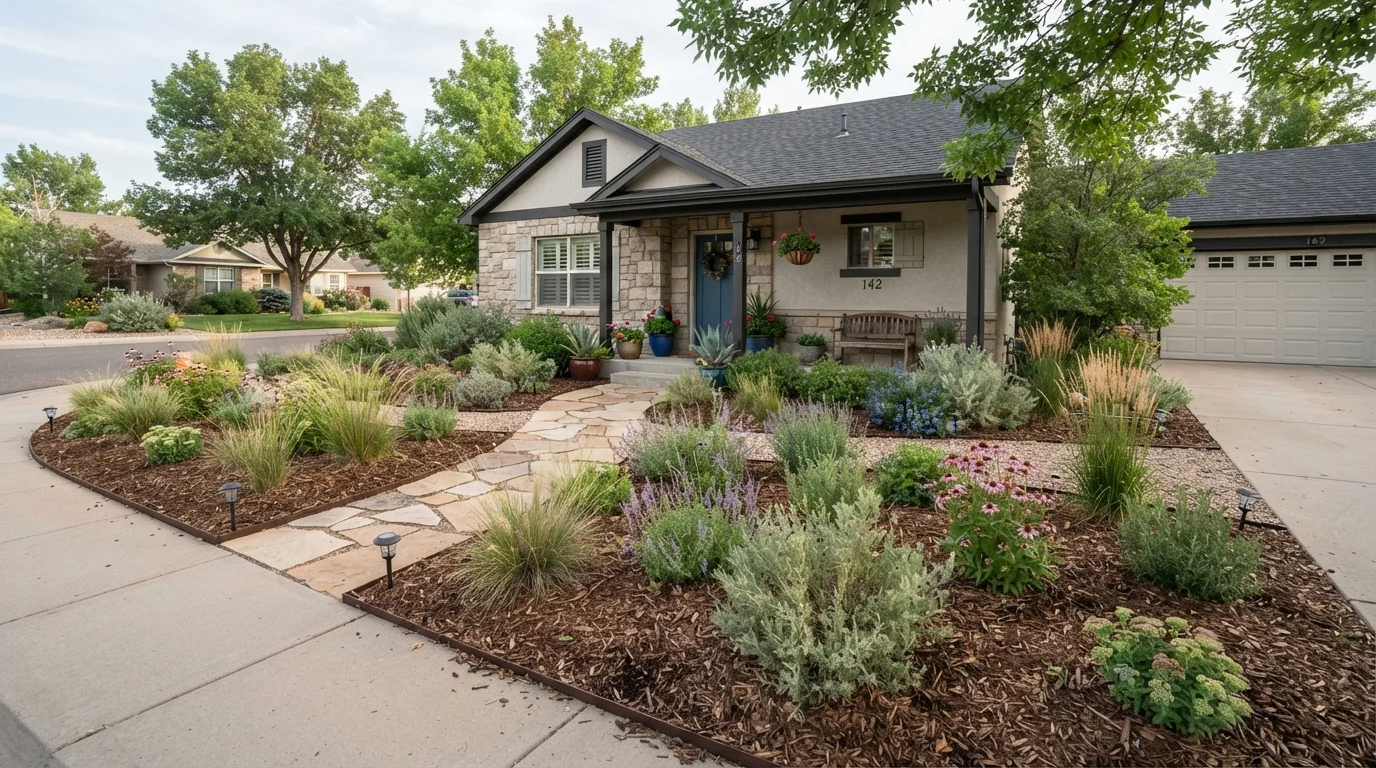
Plants that evolved in your region are already calibrated to local rainfall, soil, and temperature swings. They generally need little or no supplemental irrigation once established, tolerate local pests without chemical intervention, and do not require soil amendments to thrive.
This is not just about drought-tolerant plants in dry climates. Every U.S. region has natives suited to its conditions, from the humid Southeast to the cold Upper Midwest. Your local Cooperative Extension office (run through the land-grant university system in each state) publishes free lists of regionally appropriate plants, which is a reliable starting point that does not require buying anything.
Pairing native plants with good soil preparation at the outset compounds the savings. See how to build healthy soil affordably for approaches that do not require expensive bagged products.
Rethink how much lawn you actually need
Turf grass is one of the most resource-intensive landscape elements most families maintain. It needs regular mowing, seasonal fertilizing, and more water than almost any other planting. If you have more lawn than you actively use for recreation, you are paying to maintain space that delivers little return.
Replacing turf sections with low-growing ground covers, gravel, or mulched planting beds cuts both mowing frequency and irrigation costs. Hardscaping, such as a simple paver patio or gravel path, requires no watering at all and holds its appearance for years with minimal attention.
The perennials vs. annuals planning guide explains how plant choices affect how much you spend each spring. Swapping annual flower borders for perennial plantings that come back on their own is one of the most straightforward ways to shrink the replanting line in your yard budget.
Mulch beds and manage water deliberately
A 2- to 3-inch layer of wood chip or shredded bark mulch over planting beds does two things at once: it slows soil moisture loss, which cuts how often you need to water, and it blocks weed germination, which cuts the time and money you spend on weeding or herbicides. Mulch breaks down over time and adds organic matter to the soil, so it is not a wasted expense.
Watering inefficiency is a separate and often underestimated cost. Watering habits that waste money outlines how timing and method affect both plant health and water bills. Drip irrigation or soaker hoses deliver water to roots with far less waste than overhead sprinklers, and they are not expensive to install in most home gardens.
Choose plants rated for your specific hardiness zone and average annual rainfall
A plant that suits your climate survives without intervention. One that does not will demand constant supplemental watering, protection, or replacement, all of which cost money repeatedly.
Group plants with similar water needs together in the same bed
Mixing drought-tolerant plants with water-hungry ones forces you to either overwater the drought-tolerant ones or underwater the thirsty ones. Either outcome leads to plant failures and replacement costs.
Apply mulch every one to two years to maintain a consistent 2- to 3-inch layer
Mulch depth below 2 inches loses its weed-suppression effect quickly. Topping it up on a schedule costs less than the weeding labor or herbicide applications it replaces.
Install edging between lawn and planting beds at the time of installation
Without a physical barrier, grass creeps into mulched beds and requires regular hand removal or chemical treatment. Edging installed once prevents that recurring labor.
Research mature plant size before purchase and plant at full-grown spacing
Plants installed at proper mature spacing look sparse at first but never need corrective pruning for overcrowding. Plants installed too close together require removal or heavy cutting within a few years.
Plan spacing and placement before you plant
One of the most common and expensive landscaping mistakes is planting too close to structures, utilities, or other plants. A shrub planted three feet from a foundation may look fine for two years, then require removal or constant cutting back as it reaches mature size. Tree roots planted near sewer lines or driveways create repair bills that dwarf the original cost of the tree.
Read the mature size on every plant label before deciding where it goes. Allow for full grown spread, not just current size. This single habit prevents the two most common yard cost problems: plants that outgrow their space and need professional removal, and plants crowded together that compete for resources and fail early.
For a broader view of home decisions that prevent expensive repairs, the seasonal home maintenance guide covers how proactive choices across the property reduce emergency costs.
This article provides general home and garden information for educational purposes. Costs and plant suitability vary by region; consult local resources such as your Cooperative Extension office for advice specific to your area.