

Key Takeaways
Why watering habits matter for your budget
Outdoor water use accounts for a large share of household water consumption in many parts of the country, and much of that water never reaches plant roots. It evaporates, runs off compacted soil, or soaks ground that does not need it. The result is a higher water bill and plants that may not even be healthier for the extra moisture.
The good news is that better watering habits do not require expensive equipment or a lot of extra time. Most of the savings come from timing, technique, and a few low-cost tools. If you are already thinking about longer-term garden costs, the approach you take to plant selection matters too. See our guide to perennials vs. annuals for ways to reduce what you spend replanting each spring.
Watering in the middle of the day when temperatures are highest.
Why it happens: Many gardeners water whenever they have a free moment, often midday on weekends or after work during summer afternoons.
Running sprinklers on a fixed schedule regardless of recent rainfall.
Why it happens: Automatic timers are convenient, and many people set them once and forget about them for the whole season.
Watering shallowly and frequently instead of deeply and less often.
Why it happens: It feels responsible to water every day, and short sessions seem like they are enough to keep plants going.
Using overhead sprinklers for plants that do better with ground-level watering.
Why it happens: Sprinklers cover large areas fast and feel efficient, so many gardeners use them for everything by default.
Neglecting mulch, which causes soil to dry out faster between waterings.
Why it happens: Mulching feels like an extra step, and some gardeners do not connect bare soil to higher water bills.
Small changes that protect your water bill long-term
Fixing these habits one at a time is more practical than overhauling your whole setup at once. Start with timing: shifting to early morning watering costs nothing and can reduce evaporation loss by a meaningful amount compared to midday sessions. From there, check whether your automatic timer still matches current weather conditions.
If you use sprinklers on vegetable beds or dense flower borders, consider switching at least those areas to a soaker hose. The upfront cost is low, and the ongoing savings in water use are real. Pair that with a layer of mulch and you will water those beds far less often through the summer.
Overwatering harms plants and your wallet
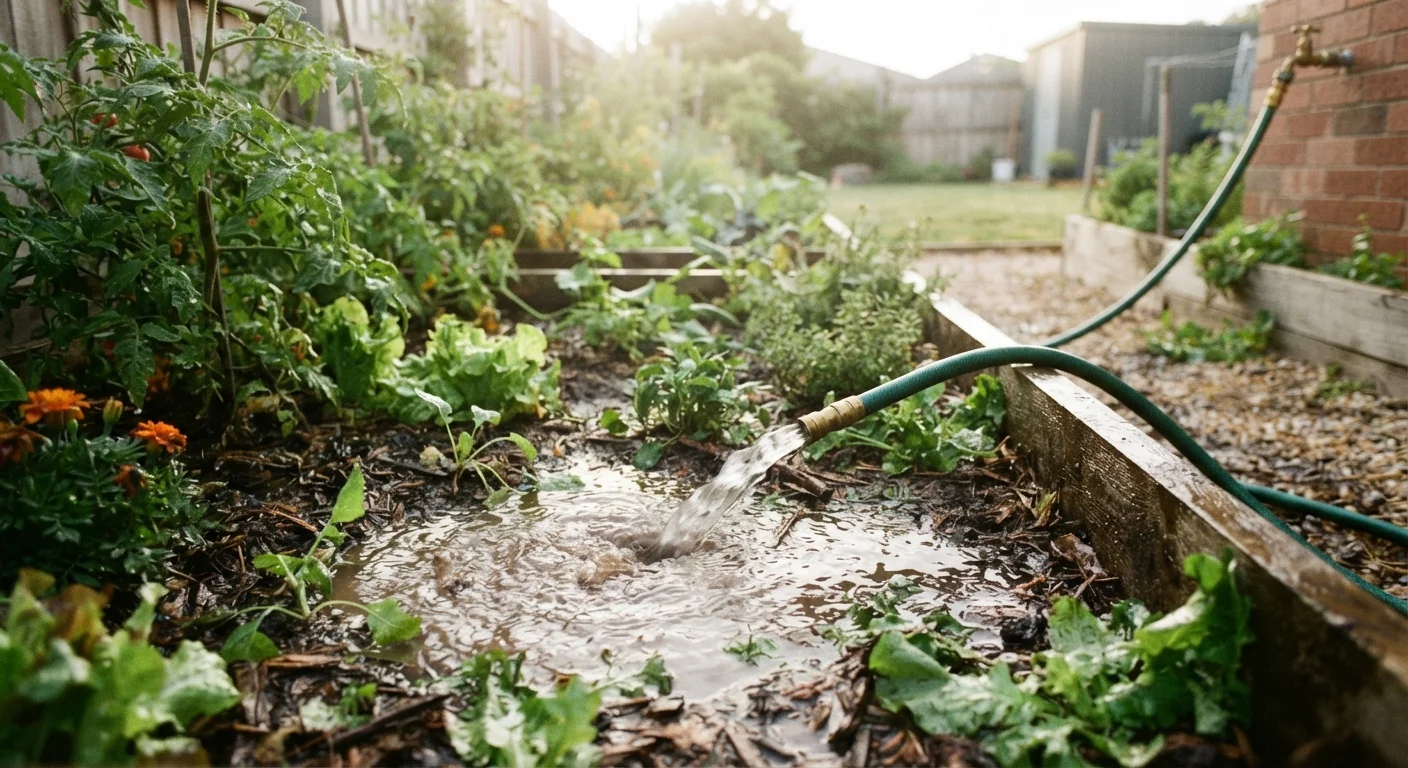
Chronically wet soil drives root rot, fungal disease, and plant loss. Replacing dead plants costs money on top of the water already wasted. Before watering, push a finger two inches into the soil: if it feels moist, wait. This one check can prevent the most expensive watering mistake in the garden.
Watering choices also connect to broader yard decisions. Landscaping that fits your local climate naturally needs less supplemental water. Our article on landscaping choices that lower yard maintenance costs covers planting and design strategies that reduce ongoing water demand. For a broader look at where household utility spending goes, where your home energy bill actually goes is a useful companion read.