

Key Takeaways
Home energy bill breakdown
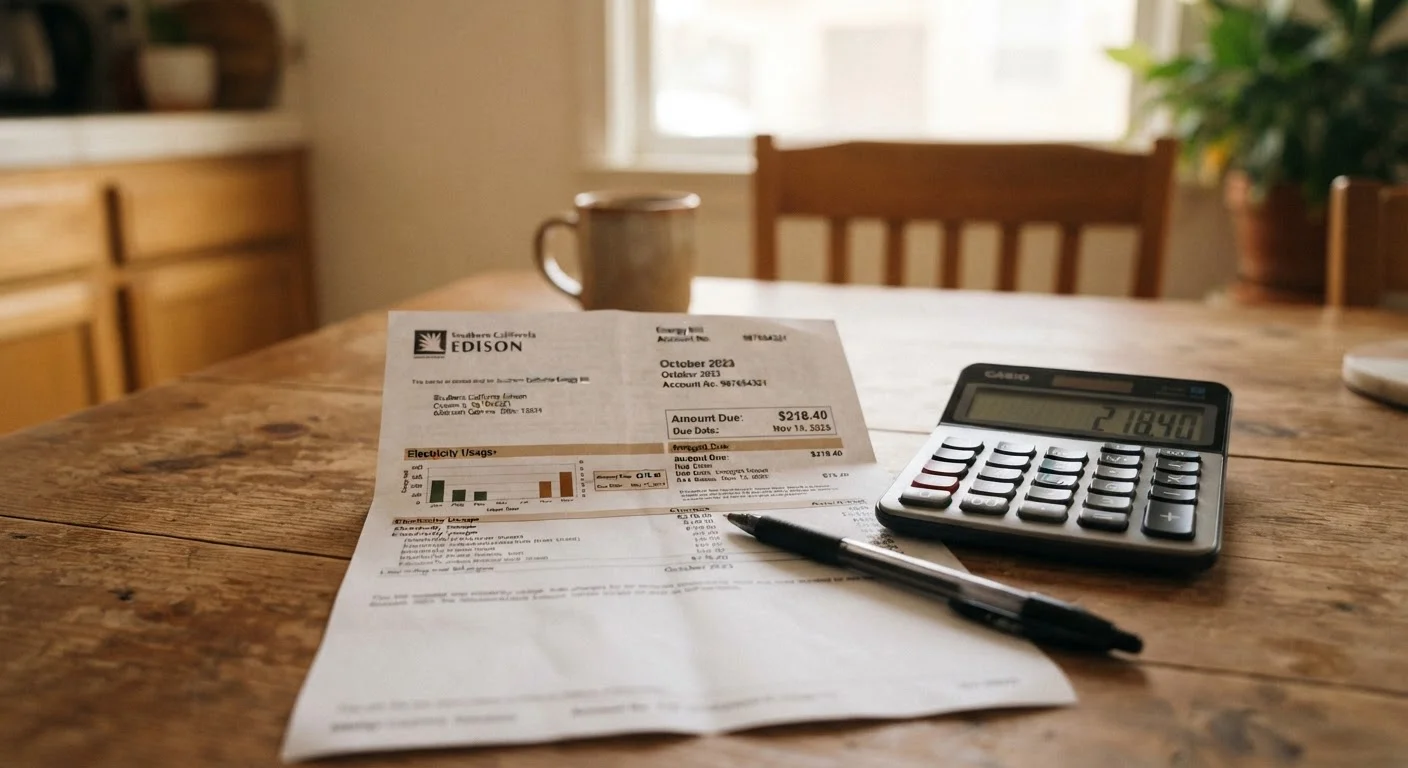
A home energy bill shows how much electricity and natural gas you consumed during a billing period and what that consumption cost. The total is shaped by a handful of major appliances, your household's daily habits, and fixed charges the utility adds regardless of usage. Understanding which category drives the most spending gives you a clear starting point for reducing costs.
Utilities typically bill electricity in kilowatt-hours (kWh) and natural gas in therms or CCF (hundred cubic feet). The rate per unit varies by region, season, and rate tier, so the same appliance can cost more to run in one state than another.
The biggest share: heating and cooling
The U.S. Energy Information Administration (EIA) has consistently found that space heating and air conditioning together account for roughly 40 to 50 percent of the average American household's total energy use. That figure alone explains why a single unusually hot summer or cold winter can send a bill noticeably higher.
The system type matters. A gas furnace shifts spending to your gas bill rather than your electric bill, but the total household cost is similar. Central air conditioning runs on electricity, and an aging or undersized unit works harder to reach the thermostat target, consuming more power in the process.
Thermostat settings have a direct, measurable effect. The EIA notes that adjusting the thermostat by 7 to 10 degrees Fahrenheit for 8 hours a day can reduce annual heating and cooling costs by around 10 percent. A programmable or smart thermostat makes that adjustment automatic, so you are not relying on memory.
Insulation upgrades reduce how hard your HVAC system has to work, which compounds savings over time. It is also worth checking our seasonal maintenance checklist for tasks like sealing duct leaks and replacing air filters, both of which affect system efficiency.
Water heating and major appliances
After HVAC, water heating is typically the second-largest energy expense in a home, representing around 14 to 18 percent of total energy use according to EIA data. Electric resistance water heaters are especially costly to operate. Heat pump water heaters use significantly less electricity for the same output, though the upfront cost is higher.
Large kitchen appliances, including the refrigerator, dishwasher, and electric range, together make up a meaningful slice of the bill. A refrigerator runs continuously, so an older model with worn door seals or a failing compressor pulls more electricity every hour of every day. Running a dishwasher on a heated dry cycle adds to that total; air drying does not.
Clothes dryers are another consistent cost. A standard electric dryer uses roughly 4 to 5 kWh per load. Washing in cold water reduces the washing machine's energy draw substantially, since heating the water accounts for most of that appliance's consumption.
Check the age of your water heater
A standard tank water heater has a typical lifespan of 8 to 12 years. An older unit often runs less efficiently, consuming more energy to maintain water temperature. If yours is approaching or past that range, comparing operating costs with newer models is worth the time.
Standby power and smaller drains
Devices that stay plugged in but are not actively in use still draw power. The U.S. Department of Energy has estimated that standby power can represent 5 to 10 percent of residential electricity consumption. Across a year, that is a real number on a real bill.
Common sources include televisions, gaming consoles, cable boxes, desktop computers, and phone chargers. A power strip with a physical switch makes it straightforward to cut power to a cluster of devices at once without unplugging each one individually.
Lighting is a smaller factor than it used to be. The shift to LED bulbs has reduced lighting's share of residential electricity use considerably. If your home still has incandescent or CFL bulbs in high-use fixtures, replacing them cuts costs, but the savings are modest compared with HVAC or water heating.
For a clear-eyed look at which energy-saving habits actually move the needle and which are mostly myth, see common myths about saving on home utilities.
Fixed charges and rate structure
Every utility bill includes charges that have nothing to do with how much energy you used. A base service or customer charge covers the cost of maintaining the grid connection and infrastructure. This fee appears whether your household used 200 kWh or 2,000 kWh that month.
Many utilities also use tiered or time-of-use pricing. Under a tiered structure, the cost per kWh rises once consumption crosses a threshold. Under time-of-use pricing, rates are higher during peak hours, typically late afternoon through early evening on weekdays. Shifting laundry, dishwasher cycles, and electric vehicle charging to off-peak hours can lower the variable portion of the bill without reducing total usage.
Taxes, renewable energy surcharges, and fuel adjustment clauses add further line items that vary by utility and state. Reading the full bill rather than just the total gives you a clearer picture of what is actually changing month to month.
If your bill includes a confusing mix of line items, the same plain-language approach used in reading a home repair estimate applies: identify fixed versus variable charges, compare the variable portion across months, and focus changes where the numbers are largest.
This article is for general informational purposes only. Energy costs vary by region, utility, home size, and equipment. Consult your utility provider or a licensed energy auditor for guidance specific to your home.