

Key Takeaways
What a contractor estimate actually contains
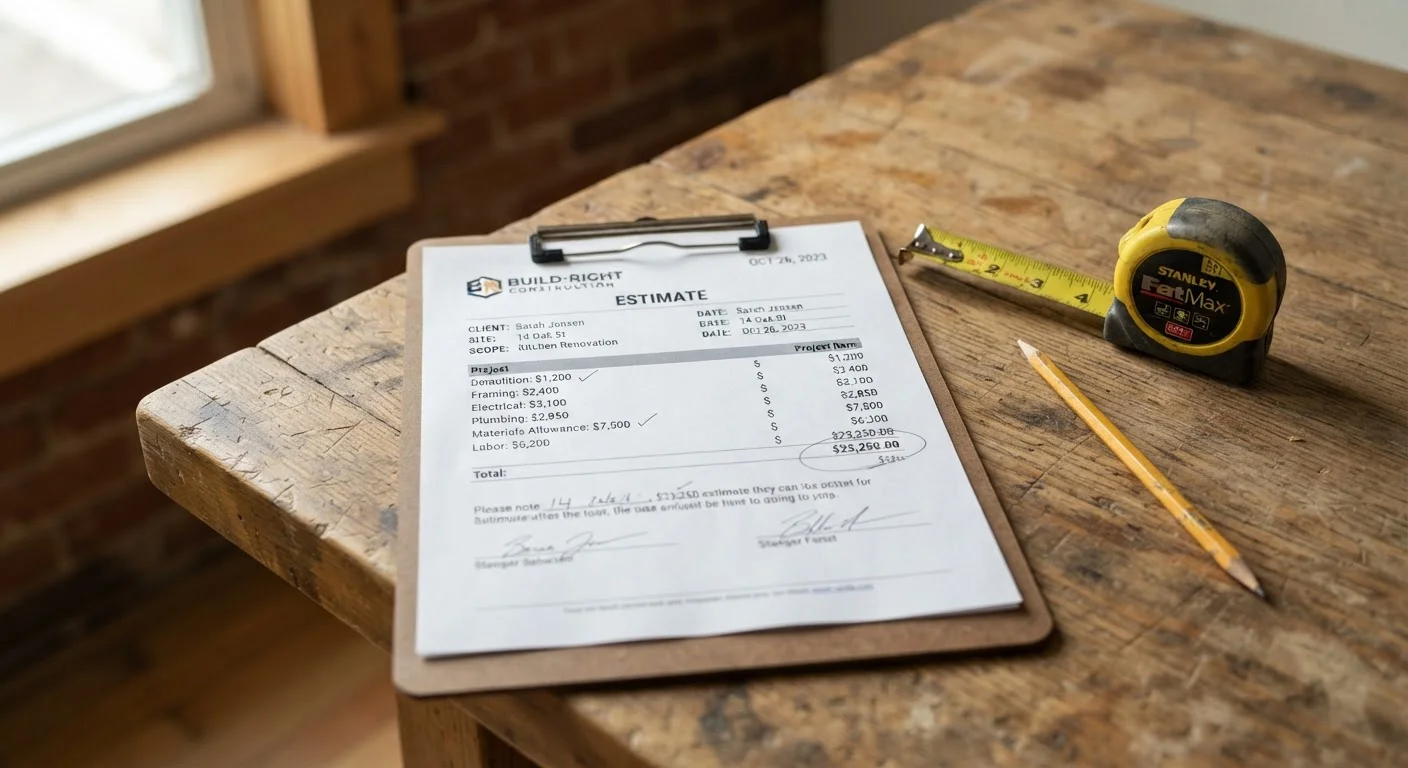
Most homeowners focus on the total at the bottom of a contractor quote. The total matters, but the lines above it tell the real story. A properly structured estimate breaks costs into three categories: materials, labor, and overhead or profit margin. When those three are bundled into a single lump sum, you have no way to evaluate whether the price is reasonable or where costs might shift if the job changes.
Materials cover everything the contractor purchases to complete the work: lumber, fasteners, pipe, fixtures, paint. Each item should list a quantity, a unit cost, and an extended total. Labor covers the hours each trade worker spends on site, priced by the hour or as a flat rate per task. Overhead and profit is the contractor's margin, typically between 10 and 20 percent of the job cost, though it varies widely by region and trade.
Some estimates also include a line called a contingency, which is a percentage set aside for unforeseen conditions. A contingency of 5 to 10 percent on older homes is reasonable. A contingency that is open-ended or unspecified is a concern.
What you will need
Reading the estimate line by line
Work through the document in the order it is written. Most contractors structure estimates to follow the sequence of work, so the order itself tells you something about how the job will proceed.
Confirm the scope of work section exists and is specific
The scope of work is a written description of exactly what the contractor will do. It should name specific tasks, not just a project category. 'Replace kitchen faucet, including shutoff valves and supply lines' is a scope. 'Plumbing work' is not. If the scope is vague, ask the contractor to rewrite it with task-level detail before you proceed.
Check that materials are itemized with quantities and unit costs
Each material line should show what is being purchased, how much of it, the cost per unit, and the total. If you see only a materials subtotal with no breakdown, ask for a material list. This lets you verify that quantities are realistic for the job size and that pricing is not inflated.
Identify how labor is priced
Labor may appear as an hourly rate multiplied by estimated hours, or as a flat rate per task. Either format is acceptable. What matters is that you can see the basis for the charge. If labor is listed as a single number with no explanation, ask whether it is time-based or task-based, and what happens to the labor charge if the job takes longer than expected.
Locate allowances and get realistic figures for each
Scan for the word 'allowance' anywhere in the document. For each allowance, research the actual cost range for that item in your area before accepting the estimate as accurate. If the allowance for flooring is $2 per square foot and local options start at $4, the allowance is underfunded and your final bill will reflect that difference.
Review the payment schedule and confirm it matches milestones
A payment schedule tied to project milestones (such as rough-in complete, inspection passed, final walkthrough approved) is standard practice for jobs that span more than a day or two. If the schedule asks for more than one-third of the total before work begins, or if payments are calendar-based rather than milestone-based, ask for a revision. You want payment to follow completed work, not the calendar.
For context on which repairs genuinely need a professional and which you might handle yourself, see the guide to DIY vs. professional repairs. Knowing that before you review an estimate helps you evaluate whether certain line items are even necessary.
Red flags and what to do about them
Certain patterns in an estimate consistently lead to disputes or unexpected costs. Watch for these:
- Allowances without clear caps. An allowance is a placeholder cost for something not yet selected, such as tile or fixtures. If the allowance is lower than realistic market prices for your area, your final bill will be higher than the estimate suggests.
- No payment schedule tied to milestones. Estimates that request a large upfront deposit (above 30 to 33 percent) with no clear milestone structure put you at risk if work stalls.
- Missing permit costs. Many repair and renovation jobs require permits. If permits are not listed and you ask who is responsible, the answer should be the contractor. Verify local requirements independently.
- No change-order language. If the contract attached to the estimate does not specify that any scope change requires a written, signed change order with a new price, verbal agreements can become expensive misunderstandings.
Permits and licensed trades matter
Work involving electrical panels, gas lines, structural elements, or plumbing into the main supply often requires permits and must be performed by licensed tradespeople under local building codes. If an estimate does not mention permits for this type of work, ask the contractor directly whether permits are required and who will pull them. Do not skip permits to save money; unpermitted work can complicate home sales and may not be covered by homeowner's insurance.
Catching these issues before signing is far less costly than resolving them mid-project. The seasonal maintenance guide can help you plan repairs before they become urgent, which gives you more time to evaluate estimates carefully rather than approving work under pressure.
Comparing multiple estimates fairly
Two estimates for the same job can differ by thousands of dollars, yet both can be legitimate. The difference often comes down to scope assumptions, material quality tiers, or how each contractor prices their labor and overhead. A lower number is not automatically the better choice if the scope is narrower.
Create a simple side-by-side comparison: list each line item from your most detailed estimate down the left column, then fill in what each competing estimate shows for the same item. Where a competitor omits a line entirely, that does not mean they are cheaper; it may mean they plan to bill it separately or have excluded it from scope.
Ask each contractor to clarify what is not included. That question often reveals more than reading the document itself.
If the project involves energy-related systems such as HVAC, insulation, or weatherstripping, it is worth understanding where your home's energy costs come from before approving that work. The breakdown of home energy costs can help you prioritize which repairs will have a real impact on your monthly bills.