

Key Takeaways
Our Verdict
Most families can safely handle a defined category of cosmetic, low-voltage, and basic plumbing tasks with standard tools and some preparation. Work involving electrical panels, gas lines, load-bearing elements, or roofing carries risks that go beyond typical DIY skill levels and often requires permits and licensed contractors. The financial case for DIY is strongest when the task is genuinely within your skill range and the cost of a mistake is low.
| Best for | Recommended |
|---|---|
| Budget-conscious homeowners comfortable with basic tools | DIY repairs for cosmetic and low-risk tasks |
| Any work involving gas lines, electrical panels, or structural elements | Licensed professional contractor |
| Homeowners unsure of permit requirements | Consult local building department before starting |
The real cost of DIY gone wrong
DIY home repairs save money only when the repair is done correctly the first time. A patch that fails, a pipe fitting that leaks inside a wall, or an electrical connection that trips a breaker repeatedly can cost far more to fix professionally than the original problem would have. Before picking up a tool, it is worth asking two questions: Do you understand what is actually causing the problem? And do you know what a successful repair looks like when finished?
These are not rhetorical barriers to starting. They are practical filters. Many repairs that look complicated are straightforward once you understand the mechanism. Others that look simple, such as moving an outlet a few inches, involve work that local electrical codes almost universally restrict to licensed electricians.
For a broader look at keeping your home in shape without surprises, seasonal maintenance planning is one of the most cost-effective habits a homeowner can build.
Repairs most homeowners can handle
The following tasks are generally within reach for a careful, patient adult with basic tools and the willingness to follow instructions closely.
- Patching small holes in drywall (up to about 6 inches) using a patch kit and joint compound
- Replacing a faucet or toilet fill valve, provided the water shut-off valve works and no pipes need cutting
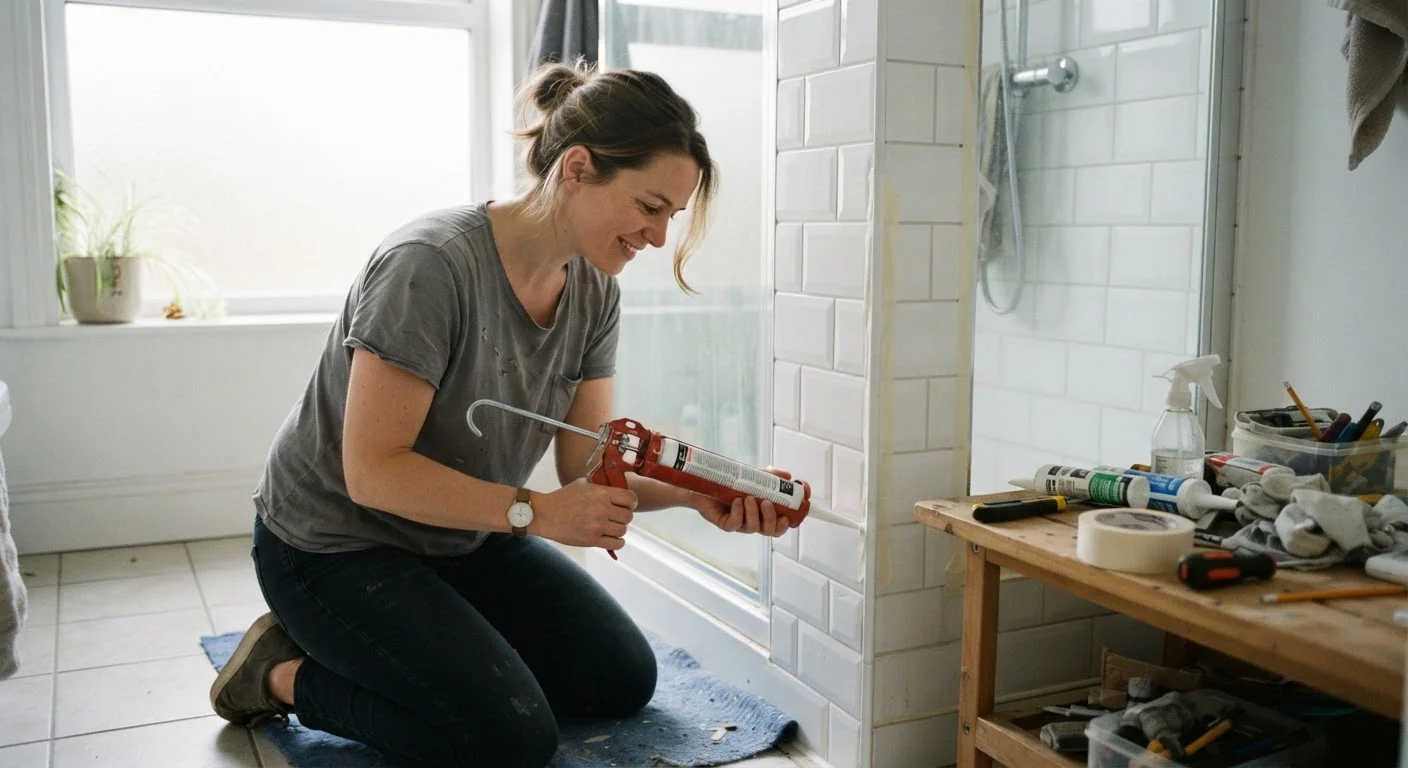
- Caulking around tubs, sinks, and windows to prevent water infiltration
- Painting interior walls and trim
- Replacing light switch covers, outlet covers, and light fixtures on circuits that can be turned off at the breaker (confirm with a non-contact voltage tester before touching any wire)
- Fixing a running toilet by replacing the flapper or fill valve
- Re-grouting tile in low-moisture areas
- Replacing weather stripping on doors and windows
Routine finish maintenance such as caulking and grouting is one of the cheapest ways to stop water damage before it starts, and the materials cost very little.
For these tasks, tool selection matters. If a job calls for a tool you will likely use once, renting rather than buying often makes more financial sense.
| DIY-friendly | Hire a professional | |
|---|---|---|
| Skill level required | Basic, learnable from instructions | Trained, licensed, often inspected |
| Typical examples | Caulking, patching drywall, faucet replacement | Panel work, gas lines, structural repairs |
| Permit usually required | No, for most cosmetic tasks | Yes, for most regulated systems |
| Risk if done incorrectly | Cosmetic or minor water damage | Fire, injury, structural failure, code violation |
| Typical material cost range | Low to moderate | Included in labor estimate |
| Time investment | Hours to a weekend | Scheduled with contractor lead time |
Work that requires a licensed professional
Some categories of home repair carry risks that make professional involvement the practical and legally required choice for most homeowners.
Electrical panel work: Any work on your main service panel, including adding circuits, replacing breakers, or upgrading amperage, involves exposure to live conductors that cannot be de-energized from inside the house. This work requires a licensed electrician in virtually every U.S. jurisdiction and typically requires a permit and inspection.
Gas line repairs: A gas leak that results from an improperly fitted connection can cause fires or carbon monoxide exposure. Gas line work, including moving or extending a gas supply line, is regulated and requires a licensed plumber or gas fitter in most states.
Structural repairs: Removing or altering walls, repairing foundation cracks, sistering joists, or any work that affects load-bearing elements should be assessed by a structural engineer or licensed contractor before any work begins. Mistakes here can compromise the safety of the entire structure.
Roofing: Beyond replacing a few shingles on a low-slope section, roof work carries significant fall risk and often requires permits. Improper repairs can void manufacturer warranties and cause water damage that is far more expensive than the original fix.
When you do hire a contractor, knowing how to read and compare quotes protects you. Understanding a home repair estimate helps you ask the right questions before signing anything.
Permits: what you need to know before you start
Permit requirements vary by municipality, but the general rule is this: any work that affects your home's structure, electrical system, plumbing system, or HVAC typically requires a permit. Common permit-required projects include adding or moving electrical circuits, replacing a water heater, adding a bathroom, and building a deck.
Unpermitted work is not just a technical violation. It can complicate or block a home sale, create liability if something goes wrong, and result in fines or mandatory removal of the work. Contact your local building department before starting any project you are uncertain about. Most will answer permit questions over the phone at no charge.
A useful habit is to assume a permit is needed and verify that it is not, rather than assuming it is not needed and discovering later that it was.