

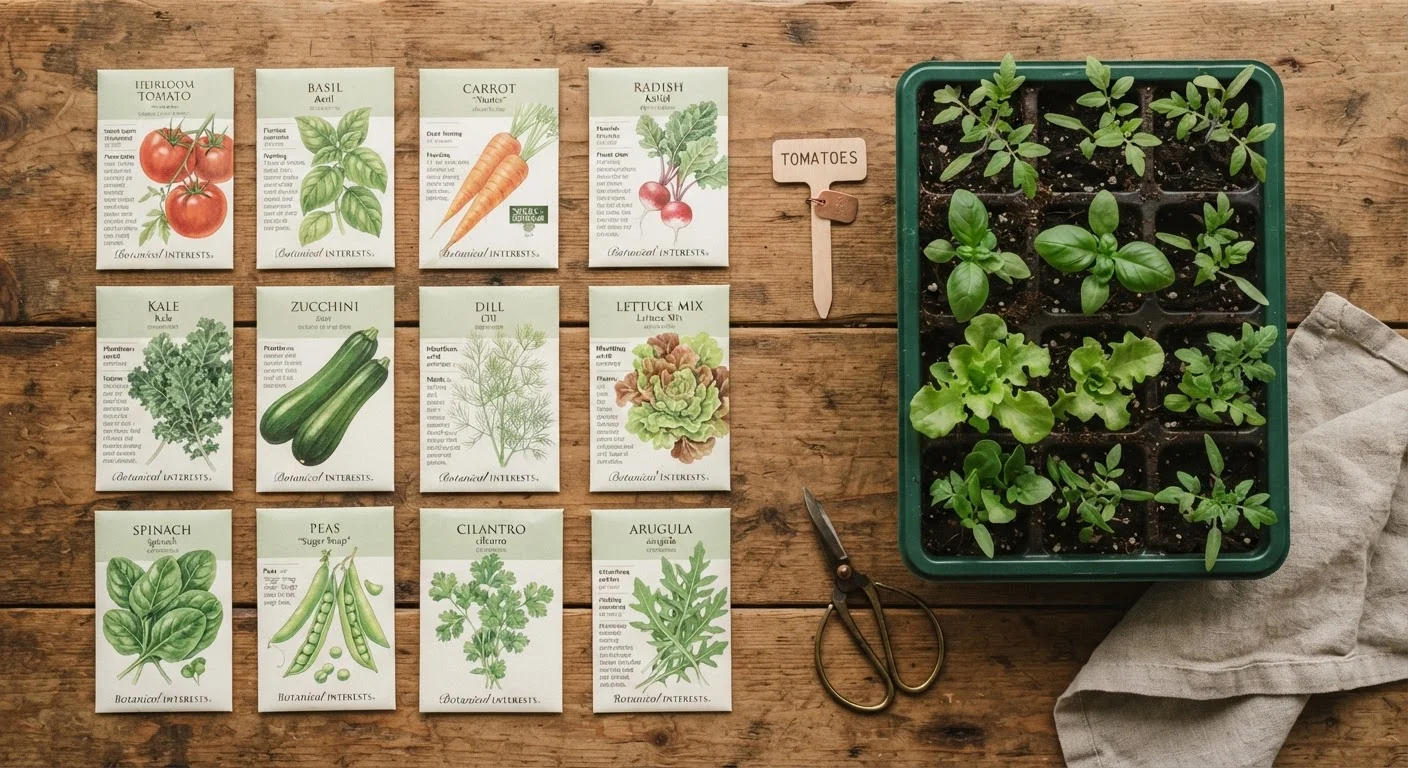
Key Takeaways
Option A
Seeds
The low-cost, high-volume starting point.
Best for: Gardeners who want to grow large quantities, try unusual varieties, or save seeds year to year.
Option B
Transplants
The time-saving, lower-risk option.
Best for: Beginners and gardeners with short growing seasons who need a head start without extra equipment.
If you want to spend as little as possible per plant over multiple seasons
Seeds
Seed packets yield many plants at a fraction of the transplant price, and you can save seeds from open-pollinated varieties to reduce costs further each year.
If you have a short growing season and grow tomatoes, peppers, or eggplant
Transplants
These crops need 6 to 10 weeks indoors before the last frost. Buying transplants skips that setup cost and reduces the chance of losing the growing window.
If you are a first-year gardener without seed-starting equipment
Transplants
Grow lights, trays, and heat mats add upfront costs that can exceed the savings from seeds in year one.
If you want to grow specific or heirloom varieties not sold locally
Seeds
Seed catalogs and packets offer far more variety selection than typical nursery transplant stock.
The real cost difference between seeds and transplants
A single tomato transplant at a garden center commonly runs $3 to $6. A packet of the same variety in seed form costs roughly the same, but contains anywhere from 25 to 50 seeds. On a per-plant basis, seeds can be 10 to 20 times cheaper before you factor in anything else.
That math changes once you account for seed-starting supplies. If you do not already own trays, potting mix, a heat mat, and grow lights, those costs can easily reach $50 to $150 in the first year. Spread across one season, that gap between seeds and transplants narrows considerably. Spread across several seasons, the equipment pays for itself.
For direct-sow crops like beans, carrots, beets, and squash, there is no equipment cost to factor in. You put the seed in the ground, and the per-plant cost stays extremely low. These crops are where seeds win without question. Check our guide to vegetables that give the most food per dollar for a full list of crops worth prioritizing.
| Criterion | Seeds | Transplants |
|---|---|---|
| Average cost per plant | $0.10 to $0.50 | $3 to $6 |
| Upfront equipment needed | Trays, lights, heat mat (indoor crops) | None |
| Variety selection | Very wide, including rare and heirloom | Limited to nursery stock |
| Risk of early failure | Higher (damping off, germination failure) | Lower (past fragile seedling stage) |
| Can save for next year | Yes (open-pollinated varieties) | Rarely (most are hybrids) |
| Best for direct-sow crops | Yes (beans, carrots, squash) | Not applicable |
| Best for long-season crops | Only with indoor setup | Yes (tomatoes, peppers, eggplant) |
When transplants are worth paying more
Some crops simply do not have enough time to mature from seed if you direct-sow after your last frost date. Tomatoes, peppers, celery, and eggplant need 8 to 12 weeks of indoor growing before they go outside. If you cannot provide that reliably, a transplant is not a luxury: it is the only practical path to a harvest.
Transplants also reduce early losses. Seeds can fail due to temperature swings, damping off (a fungal condition that kills seedlings at the soil line), or inconsistent watering. A transplant arrives past those risky early stages, which matters when you have limited garden space and one failed tray means no crop at all.
The seasonal planting calendar for budget gardeners can help you figure out which crops in your region genuinely need that indoor head start and which ones do not.
How saving seeds shifts the long-term math
The biggest financial advantage of seeds appears over multiple seasons, not just one. Open-pollinated and heirloom varieties produce seeds you can harvest, dry, and replant the following year. That drops your per-plant cost close to zero after the first season.
Hybrid transplants, which make up most nursery stock, do not reliably reproduce true to type from saved seed. So if you buy hybrid transplants year after year, you pay full price every spring with no way to reduce that cost through saving.
Our guide to saving seeds at the end of the season walks through exactly how to harvest and store seeds so you carry that saving forward. For gardeners thinking about which plants to grow year after year without replanting costs, comparing perennials and annuals adds another layer to that planning.
25-50
Seeds per packet (typical vegetable varieties)
A standard seed packet contains enough seed to plant far more than most home gardens need in one season.
8-12 weeks
Indoor head start needed for tomatoes and peppers
University extension programs consistently recommend this indoor sowing window before the last expected frost date.
$0
Per-plant cost after saving open-pollinated seeds
Gardeners who save seed from heirloom or open-pollinated crops can replant the following year at no additional seed cost.
Practical tips for getting the most out of each option
If you go with seeds, start only the crops that genuinely benefit from indoor sowing. Trying to start beans or zucchini indoors wastes time and supplies; those grow better direct-sown. Stick to tomatoes, peppers, and brassicas for indoor seed starting, and direct-sow everything else.
If you buy transplants, look for the smallest healthy plant rather than the largest. Bigger transplants often cost more, suffer more transplant shock, and do not outperform younger plants after a few weeks in the ground.
Mixing both approaches in one garden is common and sensible. Direct-sow your beans, carrots, and cucumbers from seed. Buy two or three tomato transplants for a small plot. That combination keeps costs low while protecting the crops most sensitive to a late start. The raised bed cost breakdown is worth reading alongside this if you are weighing garden setup costs too.
Growing your own produce, regardless of starting method, connects to broader goals around eating well and spending less at the store. The Eat Well, Spend Less hub covers more strategies for stretching your grocery budget with homegrown food.