

Key Takeaways
Whole grains
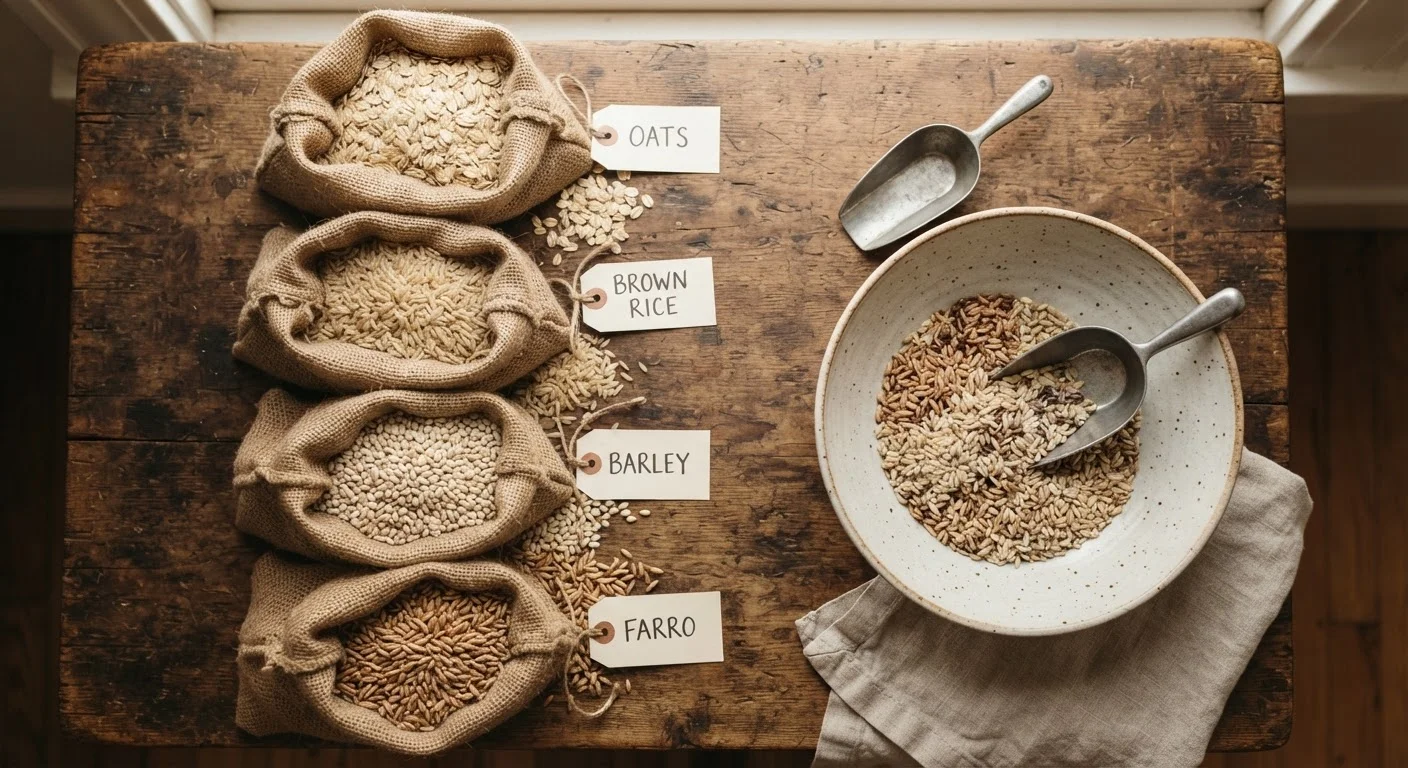
Whole grains are cereal grains that retain all three parts of the original seed: the bran, germ, and endosperm. Common examples include oats, brown rice, barley, whole wheat, and farro. Because nothing is removed during milling, they hold more fiber, vitamins, and minerals than refined grains like white rice or white flour.
The bran supplies most of the dietary fiber and B vitamins; the germ contains healthy fats and antioxidants; the endosperm is largely starch and protein. Refined grains lose the bran and germ during processing, which strips out a significant share of those nutrients.
What makes whole grains different from refined grains
When a grain is milled into white flour or white rice, the bran and germ are removed to extend shelf life and soften texture. What remains is the endosperm, which is mostly starch. That process also removes a large portion of the fiber, B vitamins, iron, and magnesium that were in the original grain.
Whole grains skip that step. The kernel stays intact, which means the nutrients stay intact too. For families trying to get more nutritional value from every grocery dollar, that distinction matters. You are not paying for enrichment additives to replace what was removed; the nutrition is there from the start.
This is part of why a whole-grain-focused pantry fits so naturally into budget-conscious eating. The food does more work without costing more money.
The cost case for stocking whole grains
Plain rolled oats are one of the least expensive foods per serving in any American grocery store. A one-pound container typically provides around ten servings, and a five-pound bag purchased in bulk brings that cost down further. Brown rice and barley follow a similar pattern.
Compare that cost-per-serving figure to boxed breakfast cereals, instant flavored oatmeal packets, or white-bread-based convenience items. The processed versions carry significant markups, and they tend to deliver less fiber and fewer micronutrients per calorie.
3x
More fiber in whole wheat vs. white bread
According to USDA FoodData Central nutritional comparisons, whole wheat bread contains roughly three times the dietary fiber of standard white bread per serving.
~$0.10
Estimated cost per serving of rolled oats
When purchased in standard store quantities, plain rolled oats typically cost around ten cents per prepared serving, making them one of the most economical breakfast staples available.
Less than 50%
Americans meeting whole grain recommendations
The Dietary Guidelines for Americans note that most U.S. adults and children consume fewer whole grains than recommended, with refined grains making up the majority of grain intake.
Whole grains also reduce food waste because they store well. A family that keeps a sealed container of oats or a bag of barley in the pantry has a reliable, long-lasting ingredient on hand for weeks. That reliability translates into fewer emergency trips to the store and fewer impulse purchases.
For a fuller picture of how whole grains fit alongside fresh produce in a tight weekly budget, the meal planning framework for a family of four lays out a practical approach to balancing staples and perishables.
Nutritional benefits worth knowing
Dietary fiber is where whole grains make their clearest contribution. Fiber slows digestion, which helps people feel full after meals for longer periods. For families managing tight budgets, satiety matters: meals that keep everyone satisfied reduce snacking and the costs that come with it.
Whole grains also supply B vitamins (including thiamine, niacin, and folate), magnesium, iron, and zinc. These nutrients support normal energy metabolism, immune function, and cell repair. Children, in particular, benefit from consistent intake of these micronutrients during periods of growth.
The U.S. Dietary Guidelines for Americans recommend that at least half of all grains consumed be whole grains. Most American families fall well below that level, largely because refined grains dominate packaged and convenience products. Shifting even one or two meals per day toward whole-grain options moves a family meaningfully closer to that target without a dramatic change in how they shop or cook.
It is worth noting that whole grains are one piece of a balanced diet. They work best alongside vegetables, legumes, and proteins. For context on pairing grains with high-value produce, see which vegetables give you the most food per dollar.
Practical ways to use whole grains every day
Rolled oats work as breakfast porridge, overnight oats, and an ingredient in baked goods. Brown rice can replace white rice in almost any dish with no recipe adjustments beyond adding a few extra minutes of cooking time. Barley thickens soups and stews and holds up well in the refrigerator for several days, making it a natural fit for batch cooking.
Whole wheat pasta and whole wheat bread are other entry points, though families new to whole grains sometimes prefer to start with oats and rice because the taste difference from refined versions is subtler.
One useful habit is cooking a large batch of a whole grain at the start of the week and using it across multiple meals: breakfast bowls, grain salads, or a side dish with dinner. This approach saves time and keeps the per-meal cost low.
Families who rely heavily on packaged convenience items may find it useful to read what those products actually cost nutritionally and financially before deciding how much shelf space to give them versus whole grains.
This article is for general informational and educational purposes only and is not medical or dietary advice. Consult a qualified healthcare professional before making significant changes to your family's diet, particularly if any family member has a health condition or specific nutritional needs.