

Key Takeaways
Start here
Why simplicity works better than complexity
Core skills
The three steps every routine needs
Next
Reading labels without getting lost
Practice
Building good habits that keep costs down
When you're ready
When to add more steps
Why simplicity works better than complexity
A ten-step routine sounds thorough, but most people cannot sustain it past the first week. When a routine takes too long or costs too much, it gets skipped, and skipping it produces worse results than a consistent three-step approach would have.
Skincare works through repetition. Products need time and regular contact with skin to do anything useful. A simpler routine used every morning and evening delivers more than an elaborate one used twice a week because life got in the way.
Budget is also a practical reality. Spending less per product means you can replace items when they run out rather than rationing them. Thin applications stretch a tube but can reduce how well a product actually works. The goal is a routine you can afford to use properly, every day, indefinitely.
Start with what you will actually use
Before buying anything new, use up products you already have at home. A gentle body wash or fragrance-free bar soap can work as a face cleanser while you figure out what your skin actually needs. Starting from what you own costs nothing and helps you notice your skin's baseline behavior before introducing new variables.
The three steps every routine needs
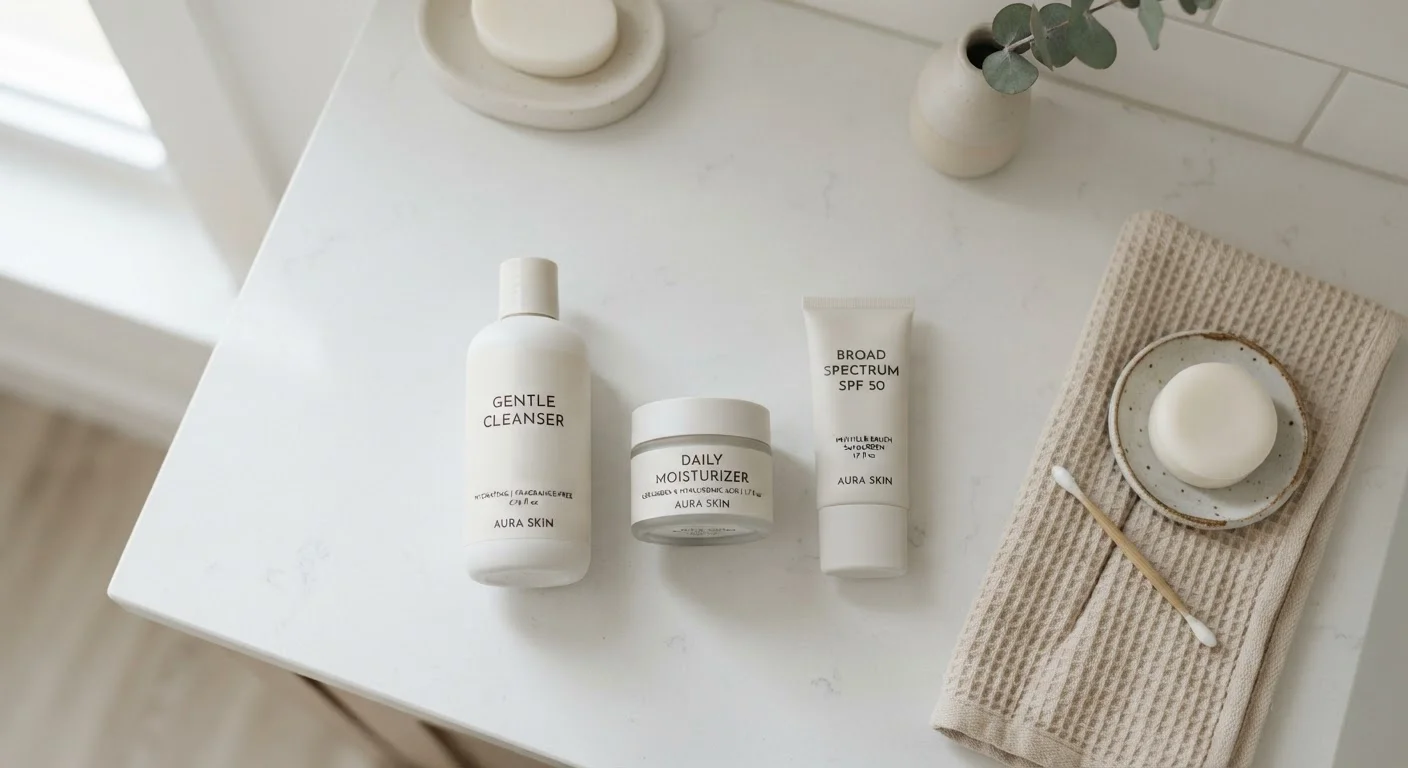
Most dermatologists point to the same core framework: cleanse, moisturize, and protect. Everything else is optional, depending on individual skin concerns.
Cleansing
A gentle cleanser removes dirt, oil, and sunscreen without stripping the skin barrier. Foaming formulas work well for oily skin; cream or gel formats suit dry or sensitive skin. Twice daily is standard, though some people with dry skin find once at night sufficient.
Moisturizing
Moisturizer helps the skin retain water. For dry skin, look for ingredients such as ceramides, glycerin, or hyaluronic acid (a water-binding molecule). For oily or acne-prone skin, a lightweight, non-comedogenic formula (one formulated to avoid blocking pores) keeps hydration without excess oil.
Sun protection
Broad-spectrum SPF 30 or higher applied each morning is the step with the most consistent evidence behind it. Chemical sunscreens absorb UV rays; mineral sunscreens (containing zinc oxide or titanium dioxide) sit on the surface and deflect them. Either type offers protection when applied generously and reapplied as directed.
For guidance on what those product labels are actually telling you, see the drugstore skincare label guide for a plain-English breakdown of common claims and ingredient terminology.
Reading labels without getting lost
Broad-spectrum SPF
A sunscreen rating that indicates protection against both UVA rays (which contribute to skin aging) and UVB rays (which cause sunburn). SPF 30 blocks roughly 97% of UVB rays.
Ceramides
Naturally occurring lipids (fats) found in the outer layer of skin. In skincare products, they help restore and reinforce the skin's moisture barrier.
Non-comedogenic
A label term meaning a formula was designed to avoid blocking pores. It does not guarantee zero breakouts for everyone, but it indicates the formulation was developed with pore-clogging in mind.
Humectant
An ingredient that draws water from the environment or deeper skin layers to the skin's surface, helping it stay hydrated. Glycerin and hyaluronic acid are common examples.
Retinoid
A class of compounds derived from vitamin A, used in skincare to promote cell turnover and address texture, fine lines, and uneven tone. They require gradual introduction to avoid irritation.
Skin barrier
The outermost layer of skin that acts as a protective shield, retaining moisture and keeping irritants out. Products or habits that disrupt it can cause dryness and sensitivity.
Ingredients appear on skincare labels in descending order by concentration. The first five or six entries make up the bulk of the formula. A water-based moisturizer that lists water first, followed by glycerin and a humectant, is telling you exactly what it mostly is.
Marketing terms like "advanced," "clinical," or "dermatologist-tested" have no standardized legal definition in the U.S. They do not indicate a specific efficacy level. The ingredient list is more informative than the front of the packaging.
Fragrance (sometimes listed as "parfum") appears in many products and is a common source of skin irritation. If you have sensitive skin, choosing fragrance-free formulas reduces that variable. Alcohol near the top of an ingredient list can be drying; alcohol listed near the bottom is usually present in small amounts that have less impact.
Understanding ingredient combinations also matters as you add products. The skincare ingredient combinations guide covers which actives work well together and which are better kept separate.
Building good habits that keep costs down
How you use products affects how long they last and how well they work. A pea-sized amount is sufficient for most actives; using more does not accelerate results and depletes the product faster.
Storage matters. Heat and light degrade active ingredients over time. Keeping products in a cool, dry spot away from direct sunlight (rather than on a sunny windowsill) extends their useful life. Products in opaque or pump packaging stay stable longer than those in open jars exposed to air repeatedly.
The beauty budget habits guide goes into more detail on storage, multi-use applications, and other practical ways to make products last without compromising results.
Patience is also part of the habit. Skin cell turnover takes roughly four to six weeks, so a product needs time before you can judge its effect. Switching products too often adds cost and makes it harder to know what is actually helping.
When to add more steps
Once the three-step routine is consistent for a month or two, adding a targeted product makes sense if a specific concern persists. Common additions include a vitamin C serum for uneven tone, a retinoid for texture and fine lines, or an exfoliant for congested pores. These actives are available at accessible price points in drugstores and pharmacies.
Introduce one new product at a time, and give it several weeks before assessing the result. Adding two products simultaneously makes it impossible to tell which one is helping or which is causing a reaction.
Some skin conditions, including persistent acne, rosacea, or eczema, benefit from a consultation with a dermatologist rather than trial and error with over-the-counter products. This article covers general skincare education and is not medical advice. A healthcare professional can assess your skin and recommend an appropriate treatment plan.
The same principle of simplicity applies broadly to wellness spending. The nutrition on a tight budget guide applies similar thinking to food: consistent, modest habits outperform complicated and expensive ones over time.
This article is for general informational purposes only and is not medical or dermatological advice. Consult a qualified healthcare professional for concerns about your skin health or before making changes to any treatment.