

Key Takeaways
Why small habits move the needle on beauty spending
Most beauty budgets leak gradually, not all at once. A half-used tube gets tossed because it smelled off. A foundation that oxidized too fast gets replaced. A serum bought on impulse sits unused for months. Each individual loss seems minor, but across a household and a year, these habits quietly drain money that could have stayed in your pocket.
The fixes are mostly about consistency and attention, not restriction. You do not have to use fewer products or sacrifice results. You just need to use what you have more deliberately. For families already thinking carefully about where money goes, this is an area where a streamlined, effective routine pays off across multiple people, not just one.
Storage: the habit most people skip
Heat, light, and air are what degrade most skincare and beauty products. A bathroom shelf directly above a shower is one of the worst places to store anything water-based or vitamin-heavy. Steam and temperature swings accelerate oxidation, which means your products become less effective before they are even close to empty.
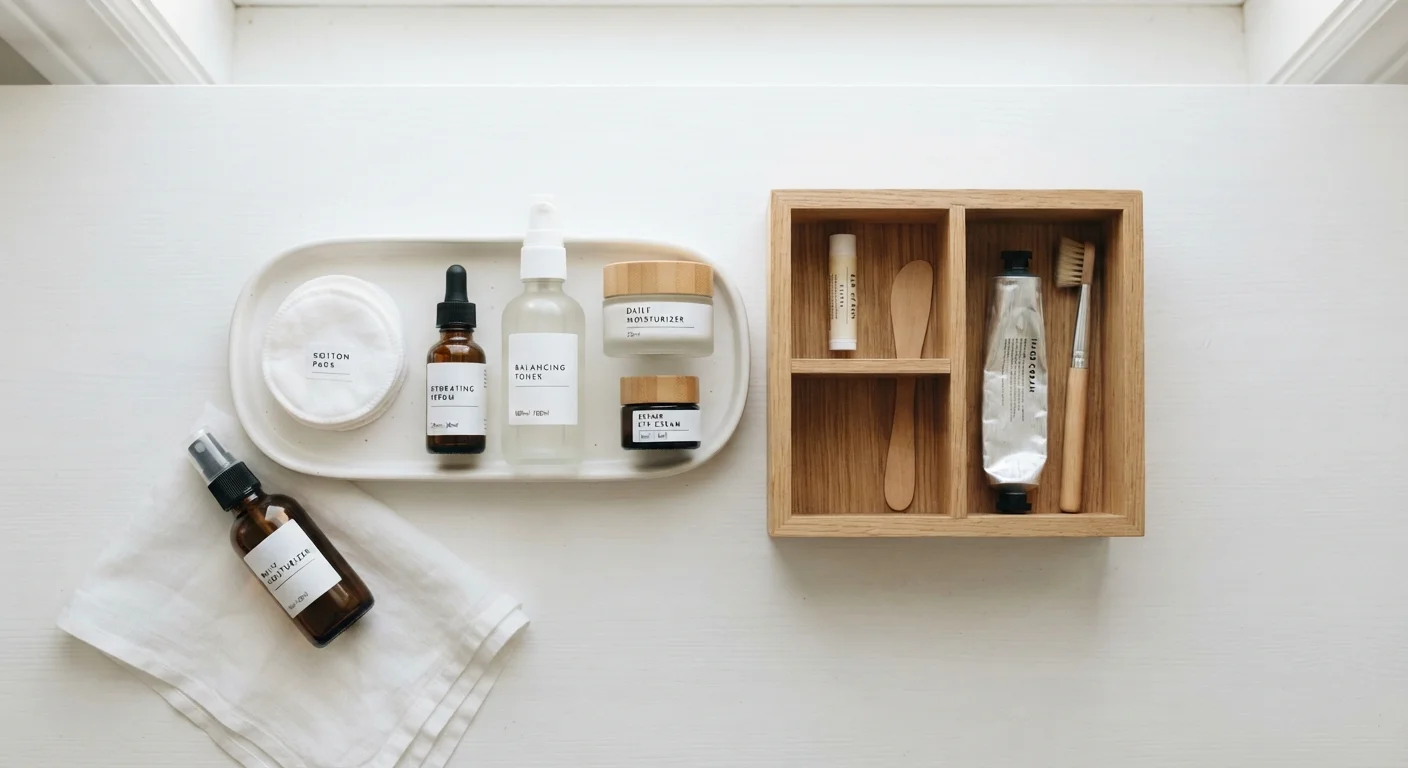
Moving products to a cool, dry spot, a cabinet away from the shower, a bedroom drawer, or even a small cooler-style organizer for serums containing vitamin C or retinoids, can meaningfully extend their shelf life. Tubes beat jars for this reason: every time you open a wide-mouth jar, you expose the full surface of the product to air. When a jar is the only option, use a small spatula rather than fingers to reduce contamination.
Understanding what ingredient labels actually tell you is part of getting storage right. Our guide to decoding drugstore skincare labels explains how to read period-after-opening (PAO) symbols and expiration markers so you know when a product is past its useful life versus when it still has months left.
Keep a small product inventory list
A simple note on your phone listing what you own and when you opened it takes about two minutes to maintain. It prevents buying a duplicate before the first is finished and flags products approaching their PAO date. This is especially useful for households where multiple people share products.
Dosing and application: more product is rarely better
Skincare instructions often recommend amounts that would empty a bottle twice as fast as necessary. For most leave-on serums with active ingredients like niacinamide or hyaluronic acid, a pea-sized amount is sufficient for the full face. Layering more on top does not double the effect; it wastes product and can cause pilling under makeup or irritation.
The same logic applies to cleansers, masks, and exfoliants. A thin, even layer covers the same surface area as a thick one. For liquid or pump products, pressing the pump only halfway down on initial use and working up from there helps you calibrate how much you actually need.
Being aware of ingredient combinations also matters here. Some active ingredients reduce each other's effectiveness when layered at the same time. Our reference on ingredient pairings covers which combinations are worth splitting into morning and evening applications, which can stretch each product further by reducing the amount used per session.
Multi-use products and an honest audit of what you finish
The beauty industry produces a lot of single-purpose products. Some are genuinely worth it. Many are redundant with something already in your collection. A tinted moisturizer with SPF covers three steps in one, which matters both for time and for the number of products you need to buy and store. Lip balm that works on cuticles means one product handles two jobs.
This is where knowing which swaps actually hold up is useful. Not every consolidation works in practice: some multi-use claims fall apart on closer inspection. But the ones that do work cut your routine's cost and complexity at the same time.
Running a quick audit every few months, pulling out everything you own and checking what is actually being used, reveals duplicate purchases and half-finished products that are about to expire. If you consistently buy the same type of product twice before finishing the first, that is a pattern worth correcting before it becomes a budget problem. The same planning mindset that works for reducing grocery waste applies directly here.
40%
Skincare products discarded before use
Consumer behavior research has suggested that a significant share of purchased beauty products are never fully used, pointing to over-buying and poor storage as common contributors to waste.
2x
Extended product life with proper storage
Dermatology literature consistently notes that keeping active ingredients away from heat and light can substantially slow degradation, often doubling the period a product remains effective.
Tool care and sunscreen: two areas with outsized returns
Makeup brushes and sponges harbor product buildup and bacteria that shorten their lifespan and, over time, affect skin. Washing brushes weekly and sponges after every use with a gentle soap extends their life by months, sometimes years, compared to leaving them dirty. A brush that lasts three years costs far less per use than one replaced every six months.
Sunscreen is its own category. Using enough, the right amount for actual protection, matters for skin health, and going light to make a bottle last longer defeats the purpose entirely. Instead, look at cost-per-use: a larger-format sunscreen often costs only slightly more than a smaller one but lasts significantly longer. Our overview of common SPF misconceptions clears up confusion around application amounts so you understand what adequate coverage actually looks like without guessing.
This article is for general informational purposes only and is not medical or dermatological advice. Consult a qualified healthcare professional for personal skin concerns or conditions.