

Key Takeaways
Why small spaces are less of a barrier than they seem
Most bodyweight exercises need far less room than people assume. A push-up, a squat, a plank, or a set of lunges all fit within a rectangle about the size of a sleeping bag. The real challenge is not square footage; it is knowing which moves suit a confined area and how to arrange the space before you start.
Research on home exercise consistently finds that adherence, doing it regularly, matters more than the complexity or setting of the workout. A small bedroom or shared living room, used consistently, will produce better results than a gym membership used twice a month. Common myths about home workouts often include the belief that limited space rules out meaningful exercise; that belief is not supported by how the body actually responds to movement.
Before looking at specific steps, it helps to understand two practical constraints that shape small-space exercise: vertical room and noise. Low ceilings rule out jumping jacks but not step touches. Downstairs neighbors rule out jump squats but not slow squats with a hold at the bottom. Both constraints have straightforward workarounds.
Setting up your space and choosing your moves
The steps below walk through a repeatable process for turning any room into a usable workout area. They apply whether you have a studio apartment, a shared bedroom, or a narrow hallway.
What you will need
Measure and clear your floor area
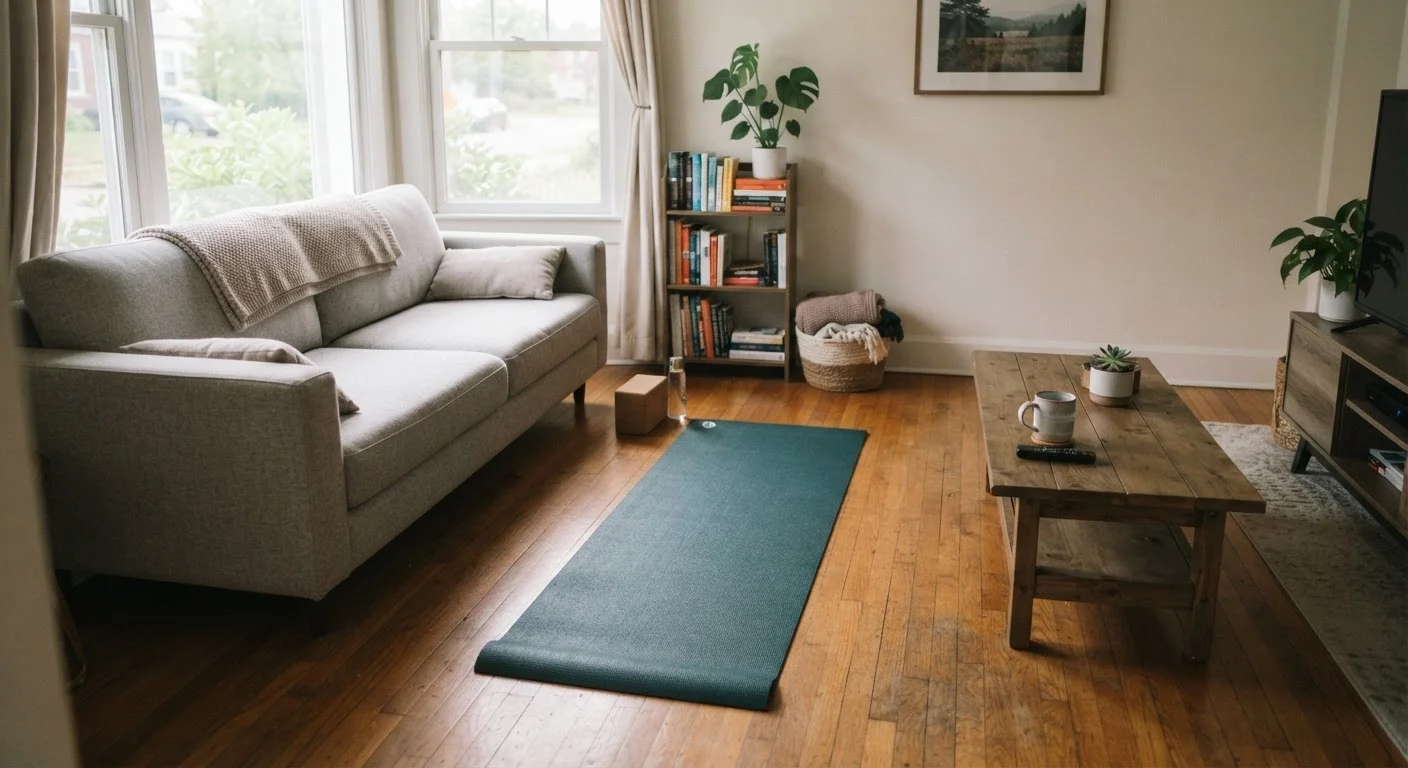
Before any session, identify the largest unobstructed rectangle you can create. Move chairs, coffee tables, or laundry baskets to the edges of the room. You do not need to rearrange the room permanently: a two-minute clear before each session is enough. Aim for at least 6 feet long and 4 feet wide. If the room cannot reach that, prioritize length over width, since exercises like lunges and reverse lunges need more front-to-back room than side-to-side room.
Check your ceiling height and floor surface
Stand in the cleared area and reach both arms fully overhead. If your hands are within a foot of the ceiling, skip any exercises that involve a full overhead arm swing or a jump. Note whether the floor is hard or carpeted: carpet provides some cushioning but can make sliding movements awkward, while hard floors are easier for most moves but harder on bare knees during floor work. A folded blanket or a thin mat solves the knee issue without taking up significant storage space.
Select exercises that fit the space
Group your exercise choices by space requirement:
- Stationary footprint (no lateral movement needed): squats, push-up variations, planks, glute bridges, mountain climbers, seated or standing core work.
- Short linear path (4 to 6 feet of travel): forward lunges, reverse lunges, inchworms.
- Low-impact cardio (replaces jumping): step touches, slow high knees, standing bicycle crunches, marching in place.
Build a session using at least one move from each group. That combination covers the major muscle groups and keeps heart rate elevated without requiring more room than you have.
Use furniture safely as anchors and supports
A sturdy chair back works for balance support during single-leg work. The seat of a couch or a low, stable step can substitute for an elevated surface in incline push-ups or step-up movements. Before using any piece of furniture, press down on it firmly and confirm it does not slide or tip. Avoid using chairs with wheels and do not use furniture that rocks or flexes under load.
Warm up and cool down within the same footprint
Warming up before harder effort reduces injury risk, and cooling down afterward helps the body recover. Both can happen entirely within your cleared zone. A warm-up of arm circles, slow torso rotations, bodyweight squats at half depth, and gentle hip circles requires no additional space. A cool-down of standing quad stretches, a seated hamstring stretch, and a supine spinal twist fits the same rectangle. Skipping warm-ups and cool-downs explains in more detail what these minutes do for recovery and long-term progress.
Once your space is set and your exercise selection is dialed in, the next step is building those sessions into a weekly structure. A balanced weekly home workout plan can help you distribute effort across strength, flexibility, and cardiovascular work without needing more space or gear.
Households with children or older adults living together can adapt these same principles. Multi-generational workout routines cover how to modify moves so different age groups can use the same small space at the same time.
Noise and neighbor-friendly workout swaps
High-impact moves create vibration that travels through floors. Swap jump squats for slow squats with a pause, swap jumping jacks for step touches, and swap burpees for a push-up combined with a slow mountain climber. These swaps keep intensity reasonable while keeping noise low. Cardio at home without machines has a wider list of low-impact options.
Keeping momentum going in tight quarters
Small spaces can make it tempting to skip a session when the room feels cluttered or the setup feels like extra work. One way to reduce that friction is to designate a specific corner or zone rather than clearing the entire room each time. Even a 6-by-4-foot patch of floor that stays consistently clear signals to your brain that the space is for movement.
On days when time is short, brief movement sessions spread across the day are a legitimate option. Movement snacks cover how those shorter bursts accumulate into meaningful activity, which matters especially for households where a single uninterrupted workout block is rarely available.
If you are new to home exercise altogether, Home fitness from scratch provides a broader foundation for building a routine without equipment or a gym.
This article is for general informational purposes only and is not medical advice. Consult a qualified healthcare professional before starting any new exercise program, particularly if you have an existing health condition or injury.