

Key Takeaways
Movement snack
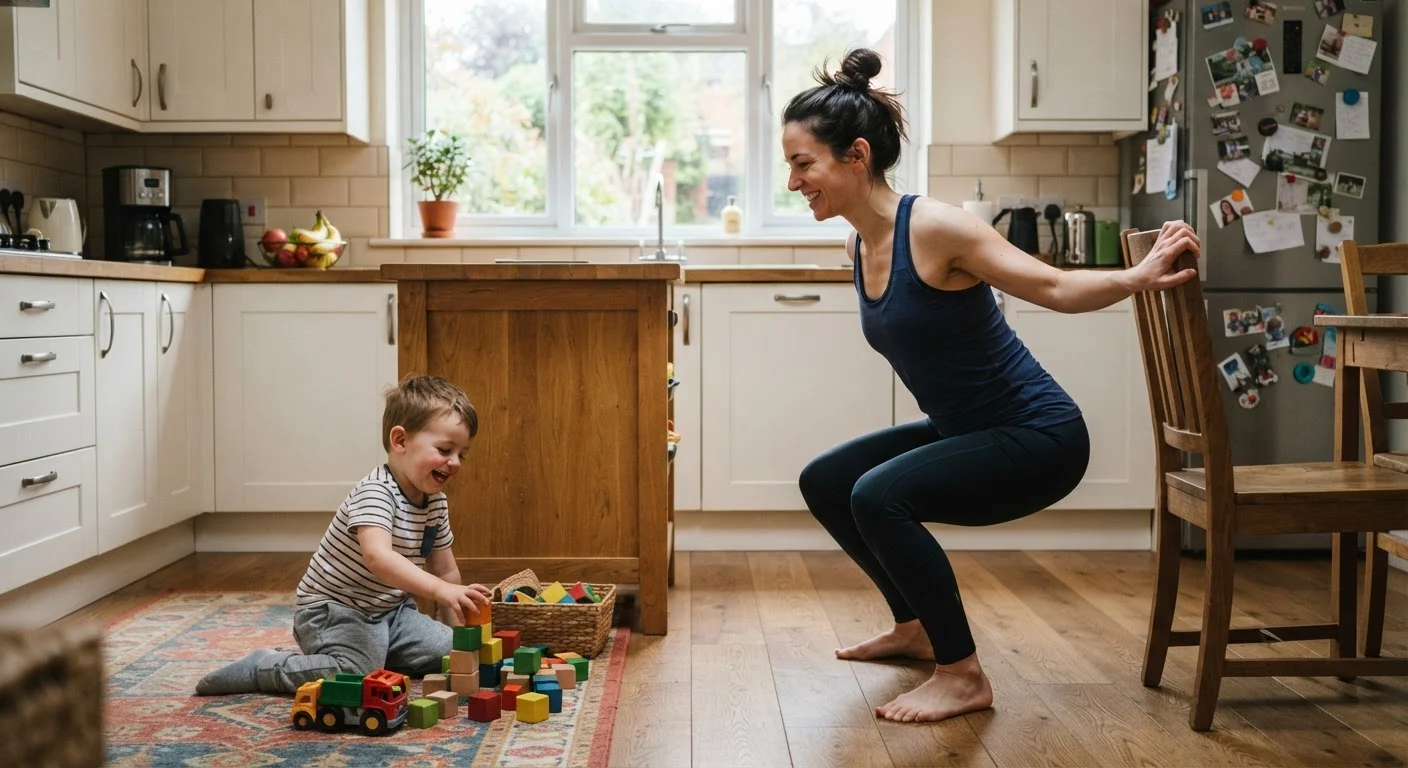
A movement snack is a brief episode of physical activity, typically two to ten minutes long, slotted into your day wherever a gap exists. Instead of waiting for a dedicated workout block, you accumulate activity in small doses throughout the day. Common examples include a set of squats before a meal, a walk around the block between tasks, or calf raises while waiting for the kettle to boil.
Exercise science refers to this pattern as 'exercise snacking.' Research published in journals including Applied Physiology, Nutrition, and Metabolism suggests that brief, frequent bouts of activity can improve cardiorespiratory fitness and blood glucose regulation, though findings vary by population and snack type.
Why a single workout block does not fit most family schedules
The standard fitness advice assumes you have 45 to 60 uninterrupted minutes available each day. For families juggling school runs, work hours, meal prep, and household tasks, that assumption rarely holds. When the window closes, exercise gets skipped entirely.
Movement snacks sidestep this problem by removing the dependency on a large, protected block of time. The goal shifts from finding a perfect hour to finding imperfect two-minute gaps, which are far more abundant. A parent who does five short movement bouts across a day accumulates more total activity than one who plans a single long session that keeps getting postponed.
This is not a workaround or a lesser option. The U.S. Department of Health and Human Services physical activity guidelines recognize accumulated bouts as a valid path to meeting weekly activity targets, provided intensity and overall volume are sufficient.
What the research actually shows
The science on exercise snacking has grown steadily. Studies have examined how multiple short bouts compare to continuous exercise for outcomes including cardiorespiratory fitness, blood glucose control, and sedentary time reduction.
A 2019 study in Applied Physiology, Nutrition, and Metabolism found that three daily one-minute stair-climbing bouts, performed six days per week, improved cardiorespiratory fitness in sedentary adults over six weeks. Separately, research on breaking up prolonged sitting with short walks has consistently shown reductions in post-meal blood glucose levels.
The evidence is promising, though it is worth noting that most studies are short-term and conducted with specific populations. Movement snacks appear most clearly effective when they are vigorous enough to elevate breathing and heart rate, even briefly. Slow strolling or gentle stretching may still reduce sedentary time but is less likely to generate the same cardiometabolic benefits as brisker activity.
6 weeks
Time to improve cardiorespiratory fitness with stair-climbing snacks
A 2019 study in Applied Physiology, Nutrition, and Metabolism found measurable fitness gains in sedentary adults doing three one-minute stair-climbing bouts per day over six weeks.
150+ min
Weekly moderate activity recommended for adults
U.S. Department of Health and Human Services physical activity guidelines state this target can be met through accumulated bouts of activity throughout the day.
2-10 min
Typical duration of an effective movement snack
Research on exercise snacking generally examines bouts in this range, with even shorter vigorous efforts showing measurable metabolic effects in some studies.
How to build movement snacks into a real family day
The most reliable movement snacks are anchored to existing habits, not scheduled as separate calendar events. Attaching a brief burst of activity to something that already happens reliably, such as brewing coffee, waiting for a microwave, or transitioning between tasks, reduces the friction of starting.
Practical anchor points include:
- Ten squats or calf raises while waiting for water to boil
- A brisk two-minute walk outside between video calls
- Wall push-ups during a TV ad break
- Marching in place while reading to a child
- A short set of lunges at the top or bottom of stairs
For families, morning and evening routines often hold the most consistent gaps. Five minutes before breakfast or after dinner adds up to nearly an hour of movement across a week. If space is tight, adapting exercises to small rooms can make almost any corner usable.
Children benefit when movement snacks are framed as play rather than exercise. Short dance breaks or animal-walk challenges between homework subjects work well and require nothing beyond floor space.
Connecting movement snacks to a broader fitness picture
Movement snacks work best as part of a larger approach rather than in isolation. If your family is building a home fitness habit from the ground up, starting with a structured home routine can provide a useful framework alongside daily snacking.
For families with more consistent time available on certain days, a balanced weekly plan covering strength, flexibility, and endurance complements movement snacks on busier days. The two approaches are not in competition. Short daily bouts maintain momentum and reduce sedentary time on days when a full session is not possible.
Movement snacking also pairs naturally with other household rhythms. Families who already batch-cook on weekends, for instance, can fold in a few rounds of bodyweight exercises between prep tasks, the same way batch cooking turns one afternoon into efficient meal planning. Small habits layered onto existing structure tend to stick.
This article is for general informational purposes only and is not medical advice. Consult a qualified healthcare professional before making changes to your physical activity routine, particularly if you have an existing health condition.